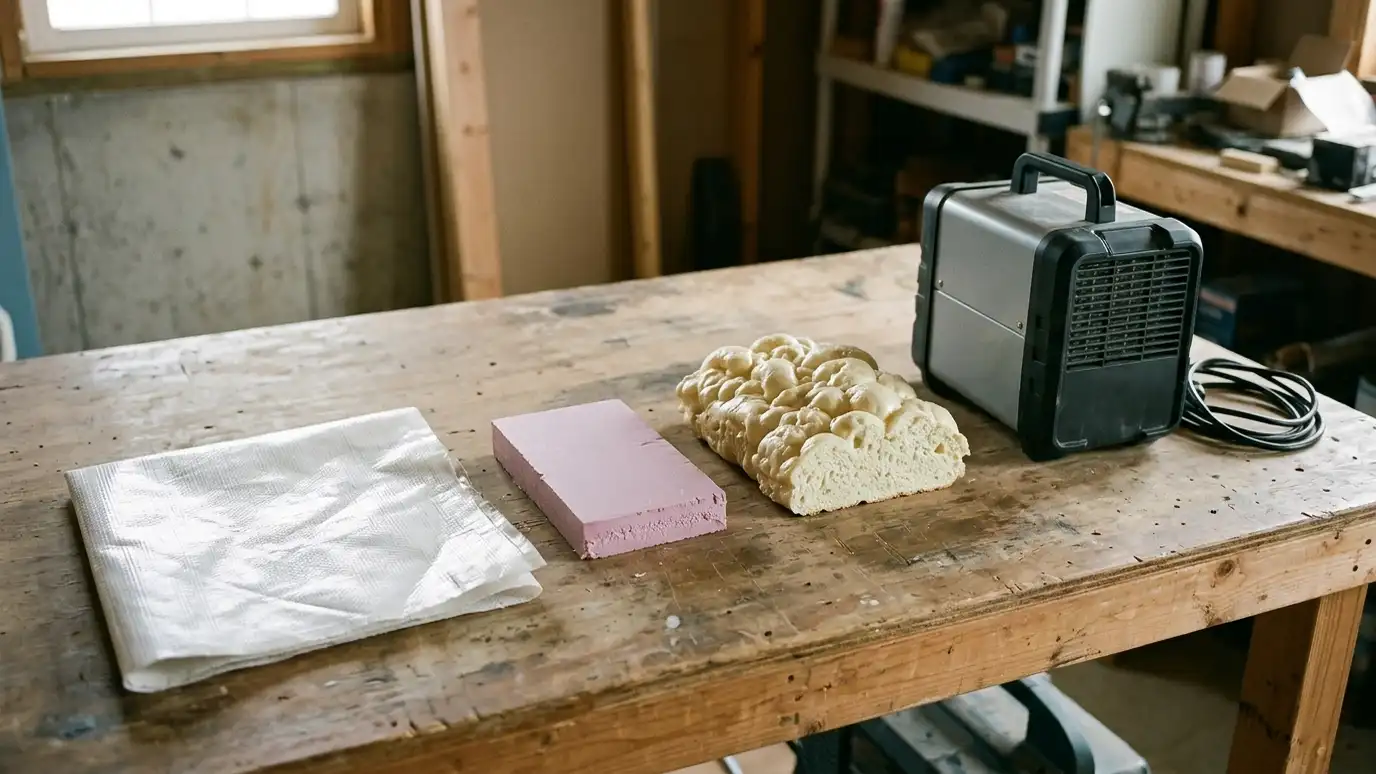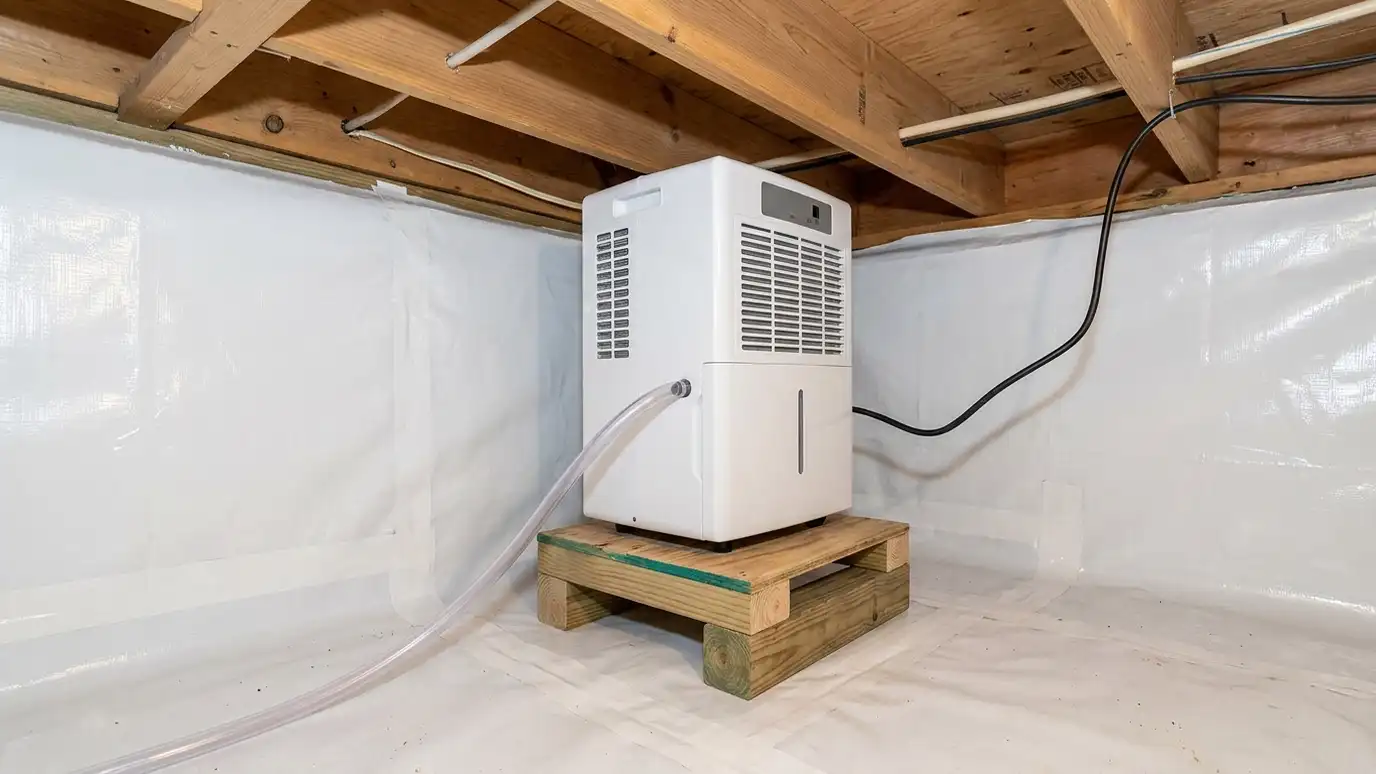
Crawl space dehumidifier installation with a properly sized unit, a drain or pump, power, a humidity control and a sealed space that lets the equipment work.
A dehumidifier is the engine of a dry crawl space. It removes moisture from the air so wood stays within a safe range, even in the muggy months. Homeowners in Nashville often buy a small household dehumidifier, hang it in the space and find it overwhelmed, drained by a hose that falls out or switched off by a tripped outlet.
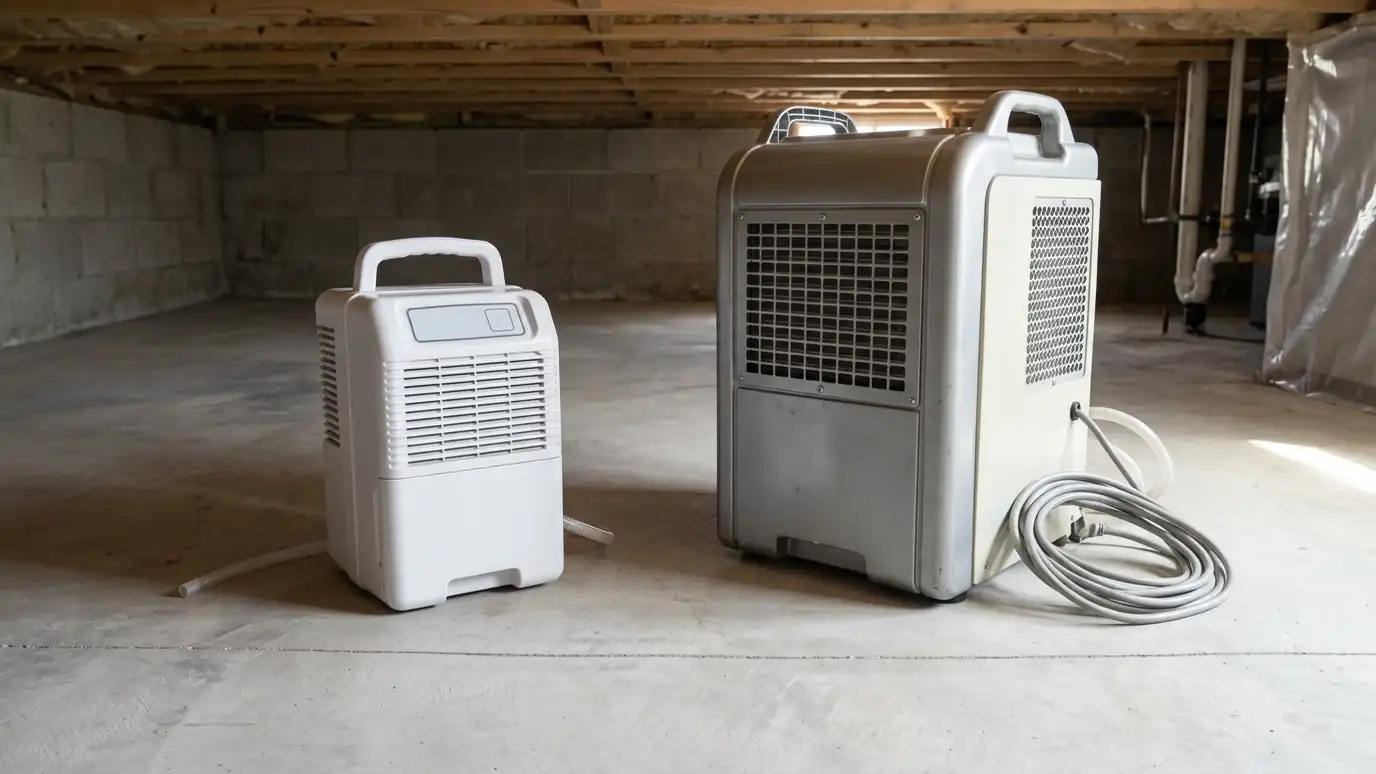
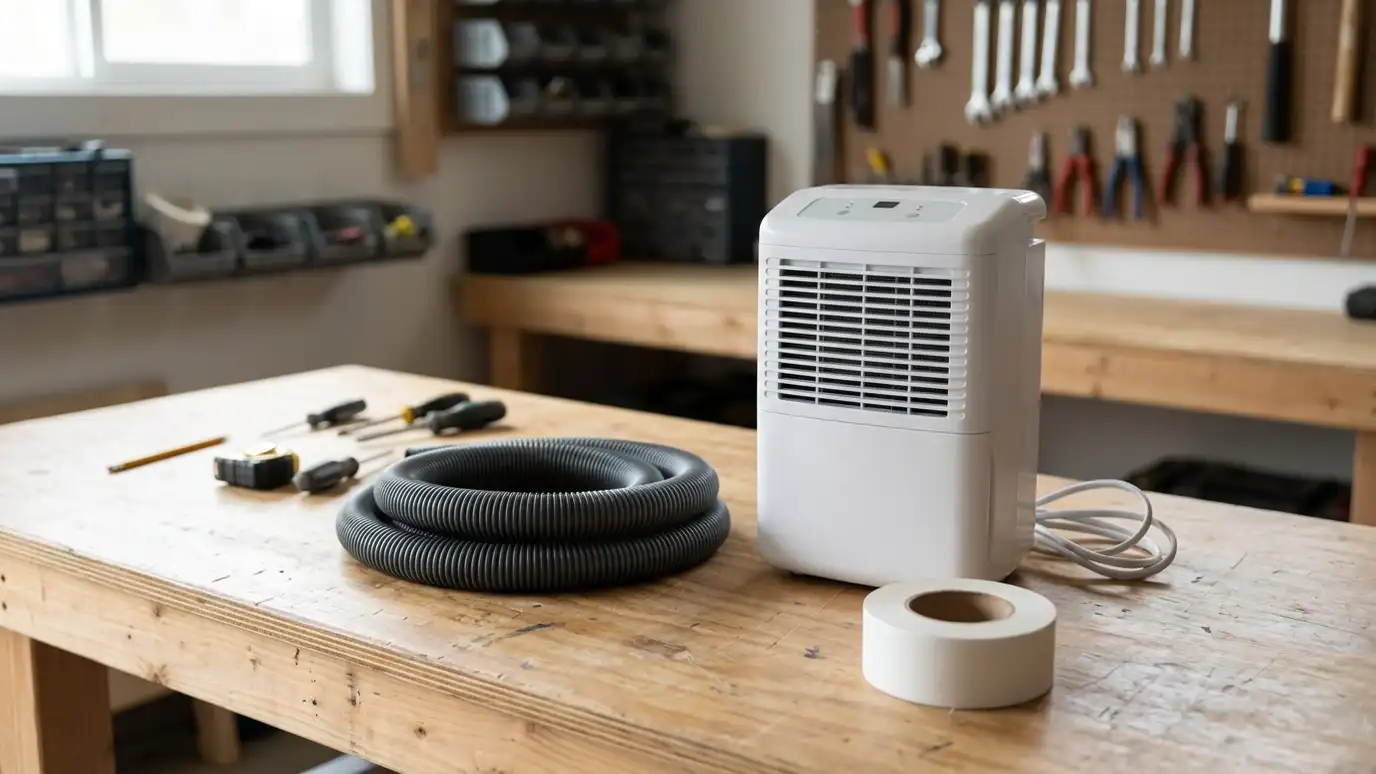
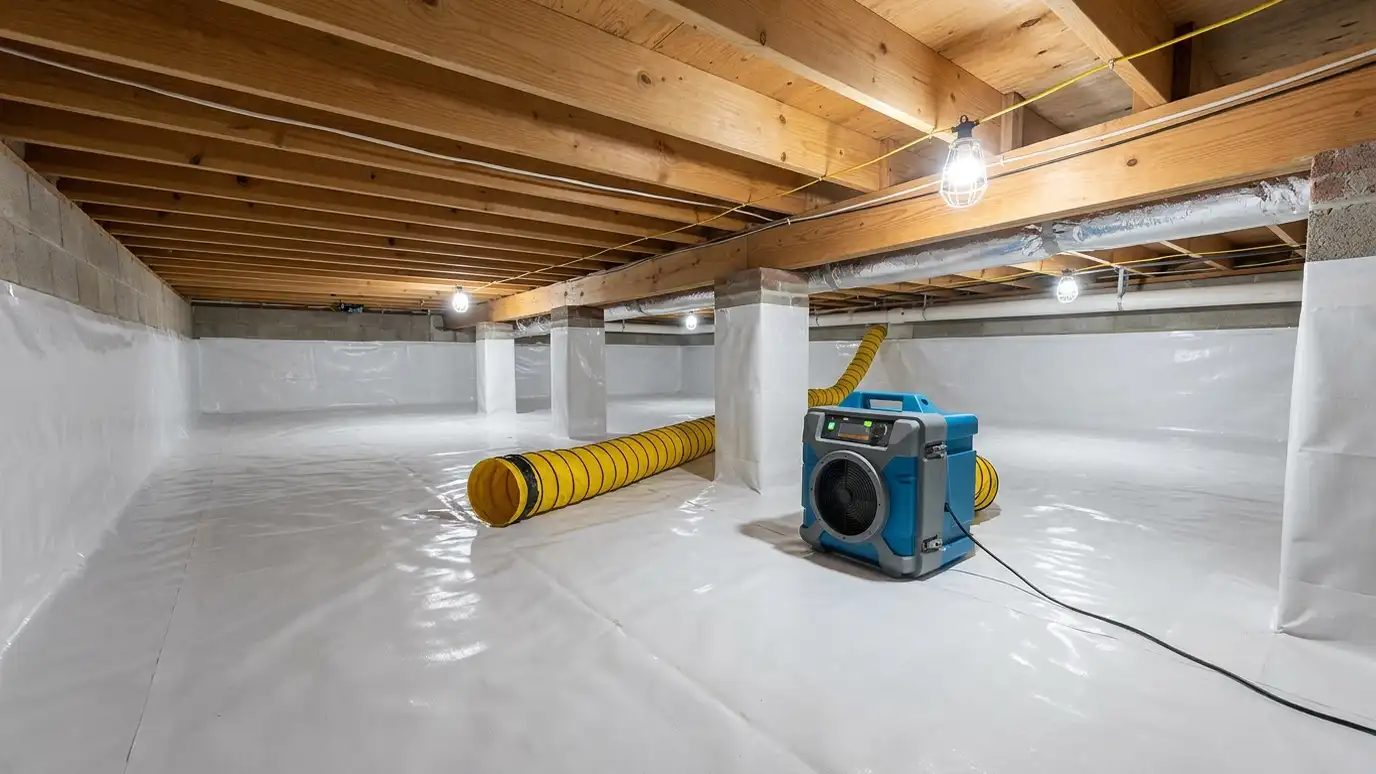
We size a crawl space dehumidifier to the volume of the space, the moisture load and the level of sealing. We mount it on a platform or hang it from joists, run a drain by gravity or with a condensate pump to a safe location, add a humidistat set to hold the space in a healthy range and arrange a dedicated outlet with an electrician when needed. A dehumidifier works most effectively in a sealed space, so we explain what to fix first. We show you how to clean the filter and read the display, and we check performance after a few weeks.
We use the space volume, climate and condition of the walls and liner to choose a capacity that can keep up.
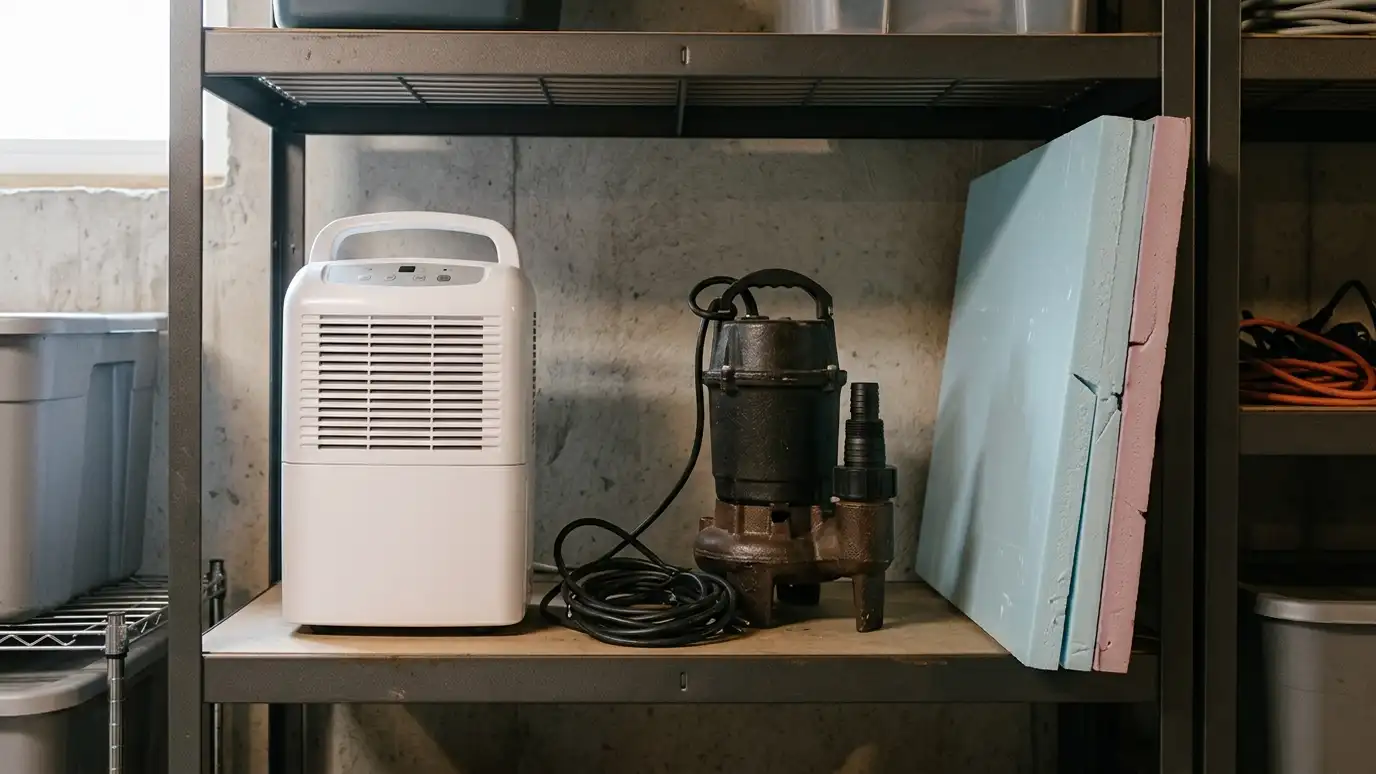
The unit is placed where it can breathe and be serviced, with a gravity drain or condensate pump to a safe discharge.
A humidistat holds the humidity range, and a dedicated outlet keeps the unit from tripping other circuits.
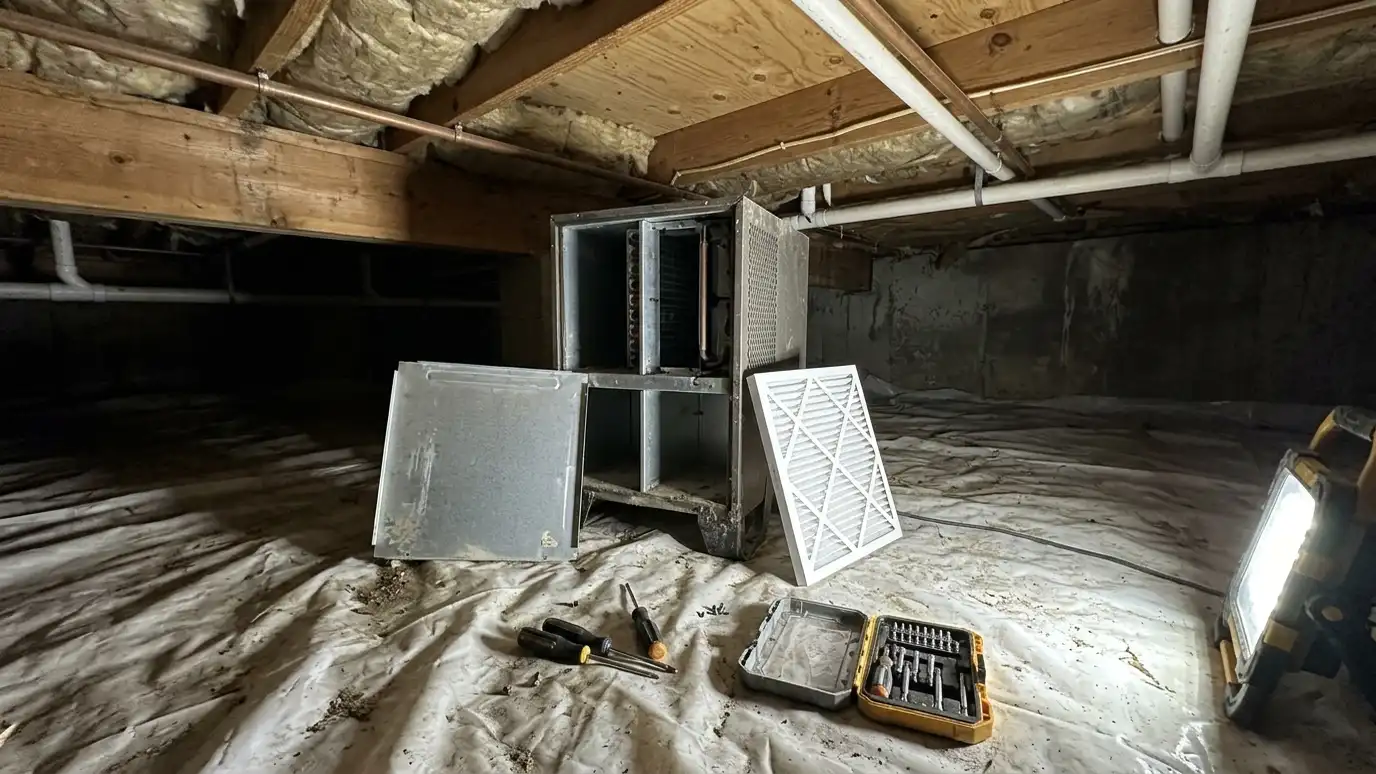
We check humidity after a few weeks and teach you simple filter care.
Drag the handle to compare.
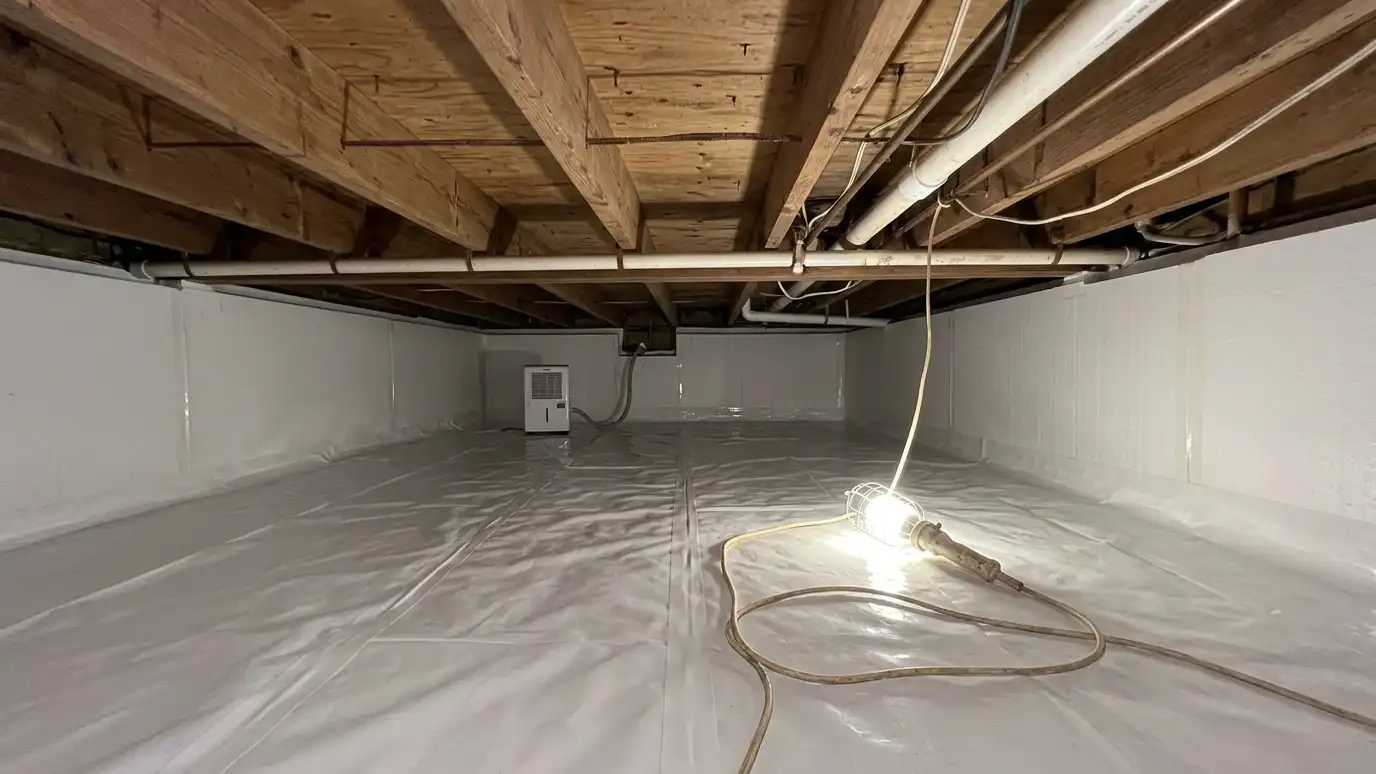
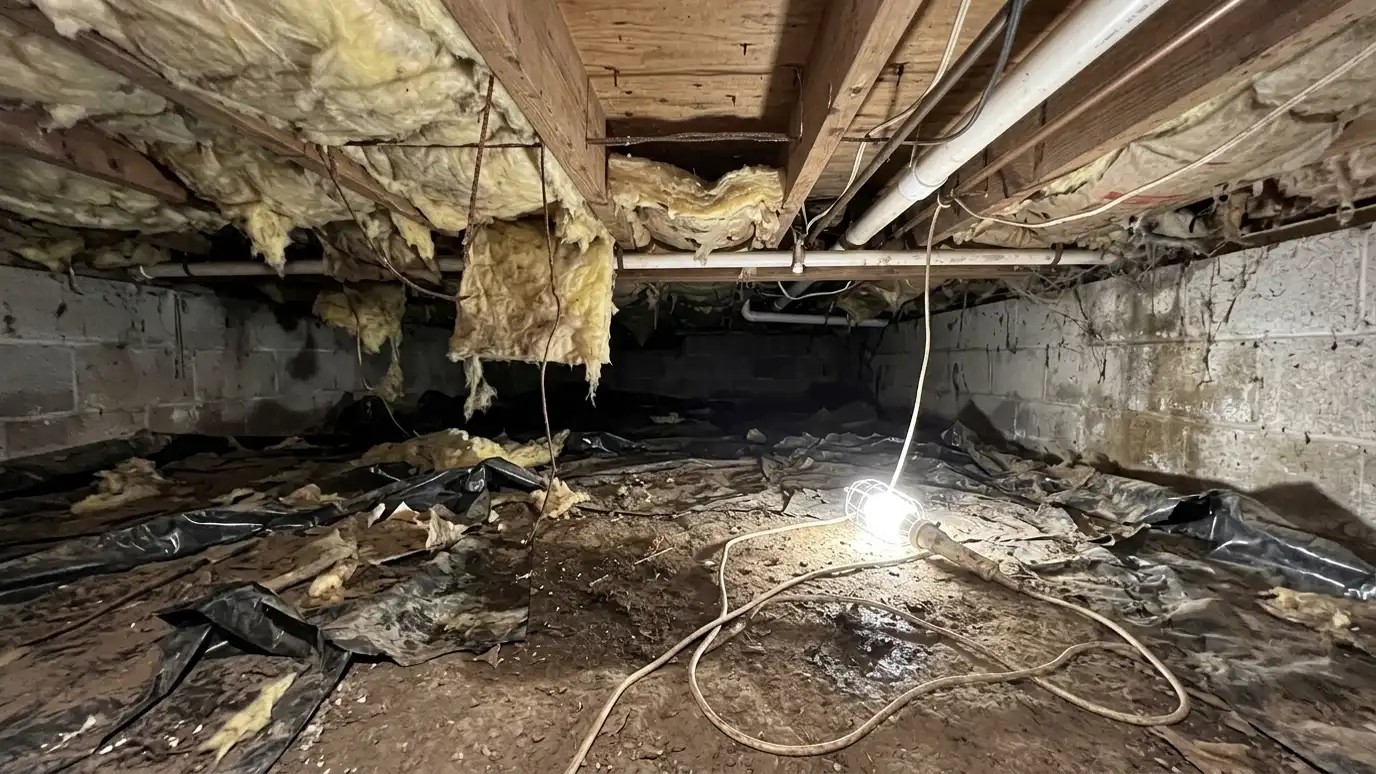 BeforeAfter
Not too small to keep up.
Off the ground, easy to service.
Gravity or pump to a safe spot.
Humidity held in range.
No shared-circuit surprises.
We confirm it is working.
Every topic has its own page with what to expect and how we approach it.
 Comparison guideDehumidifier SizingHow crawl space dehumidifiers are rated, why volume and moisture load matter and how drains, controls and placement…Learn more
 ResourceAprilaireA maker of indoor air quality products, including dehumidifiers, humidifiers and ventilation equipment for homes.Learn more
 ResourceSanta Fe DehumidifiersA maker of free-standing and whole-house dehumidifiers, including models built for crawl spaces and low-clearance installations.Learn more
Pick your home type, set the floor area and tick conditions like standing water or humid summers to see the dehumidifier capacity and sump pump class that usually fit.
You tell us what you notice, from smells and cold floors to water and sagging, and we ask about the home and past work.
We enter the space, take moisture readings and photos, measure it and look at drainage outside.
You get a plain written scope with priorities, materials, schedule and options before anything is ordered.
We clear debris, repair structure and install drainage, then dry the space to safe moisture levels.
A liner, sealed vents, insulation and a dehumidifier go in, with seams taped and checked.
We walk the finished space with you, leave a care guide and photos and set a first checkup.
It depends on volume, moisture and how sealed the space is. We size it for your site.
Often not. Crawl space units are built for cool, damp spaces and continuous running.
Running a dehumidifier uses electricity, though a sealed space needs far less than a leaky one.
Many experts suggest staying below about sixty percent, and lower is safer.
Yes, either by gravity or with a pump, so water leaves the space.
 Dehumidifier ServiceDehumidifier service and replacement that cleans filters and coils, checks drains and sensors and swaps worn or undersized…Explore
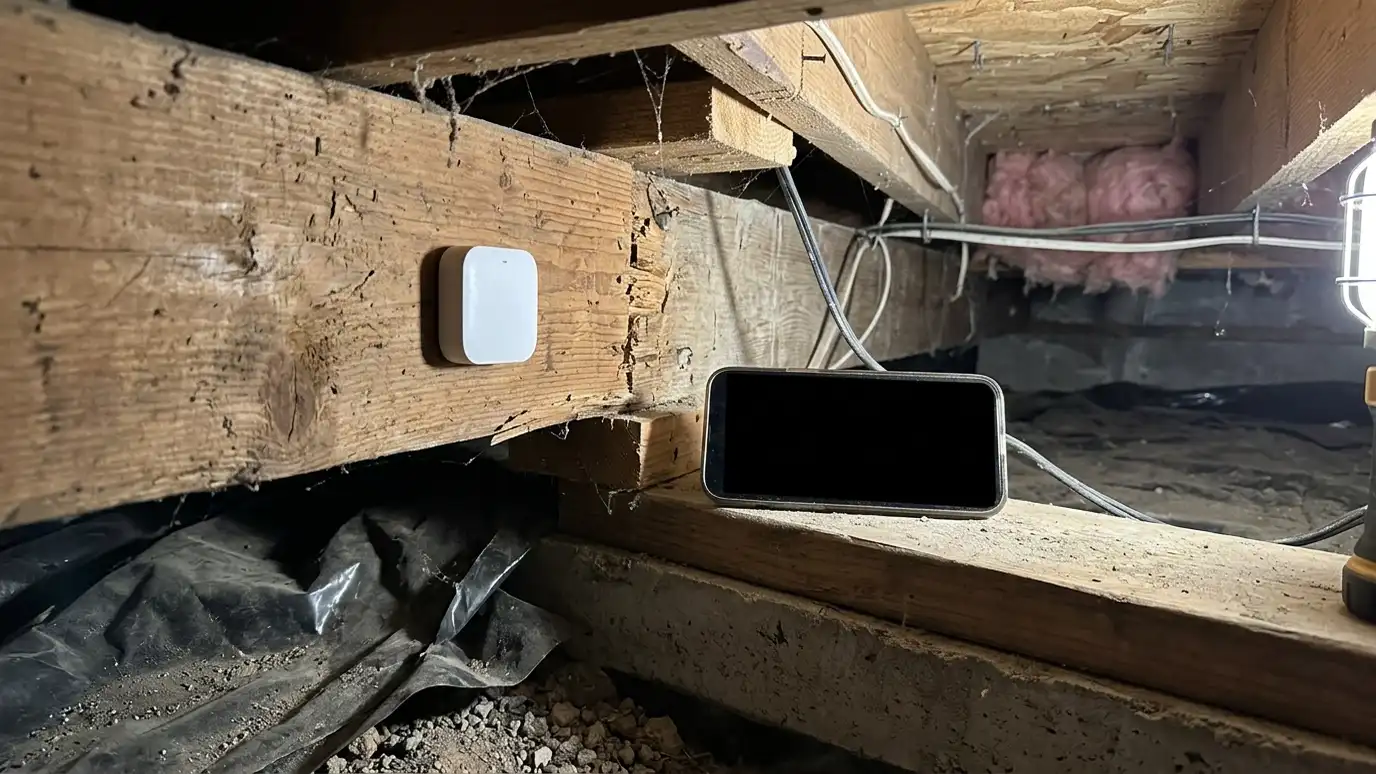 Humidity SensorsHumidity monitoring and smart sensors that track crawl space humidity and temperature and send alerts to your phone…Explore
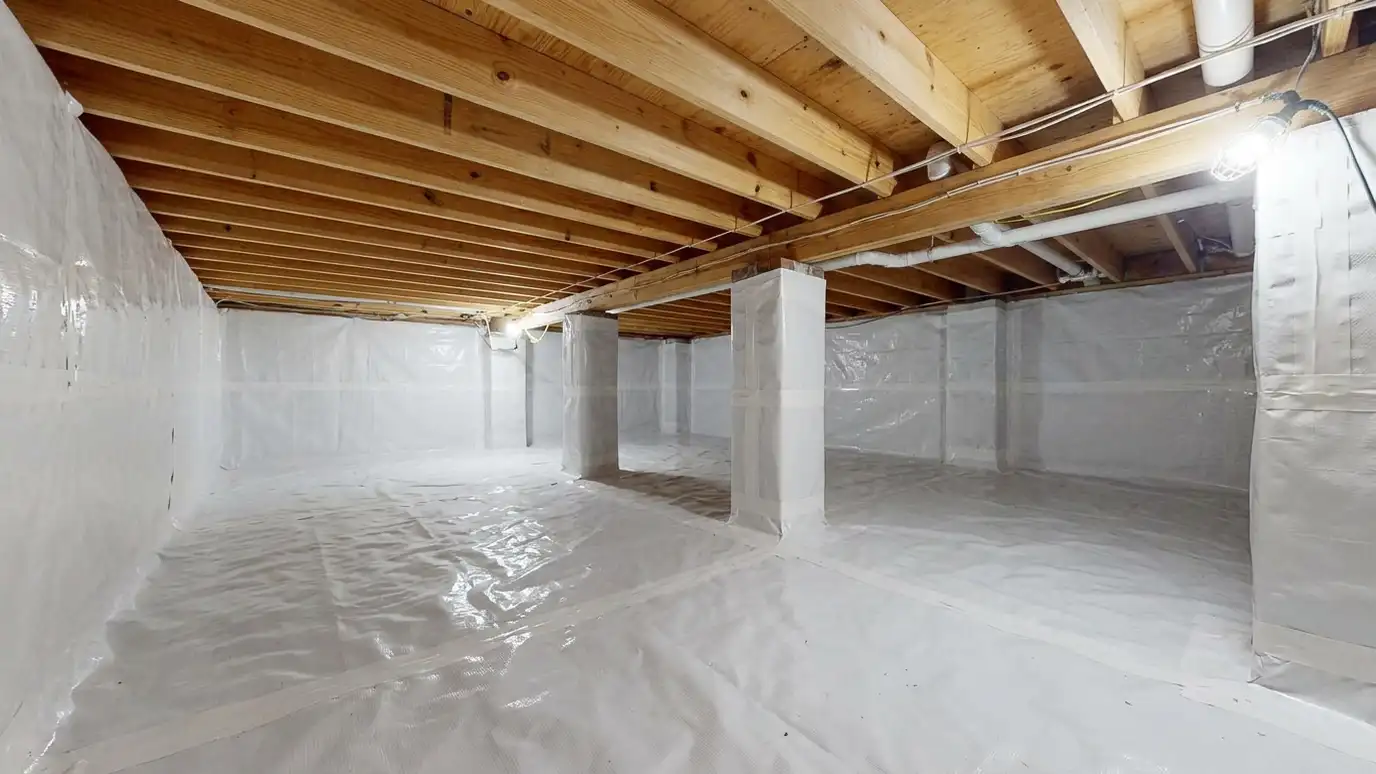 EncapsulationCrawl space encapsulation that seals the floor, walls and openings with a heavy-duty liner, insulation and humidity control…Explore
 Musty Odor RemovalMusty odor removal for crawl spaces and the rooms above that finds the moisture, mold, pests or debris…Explore
Tell us about your space and we will call you back to set up a visit.
Or call (615) 357-7797 to talk now.