Floor or walls
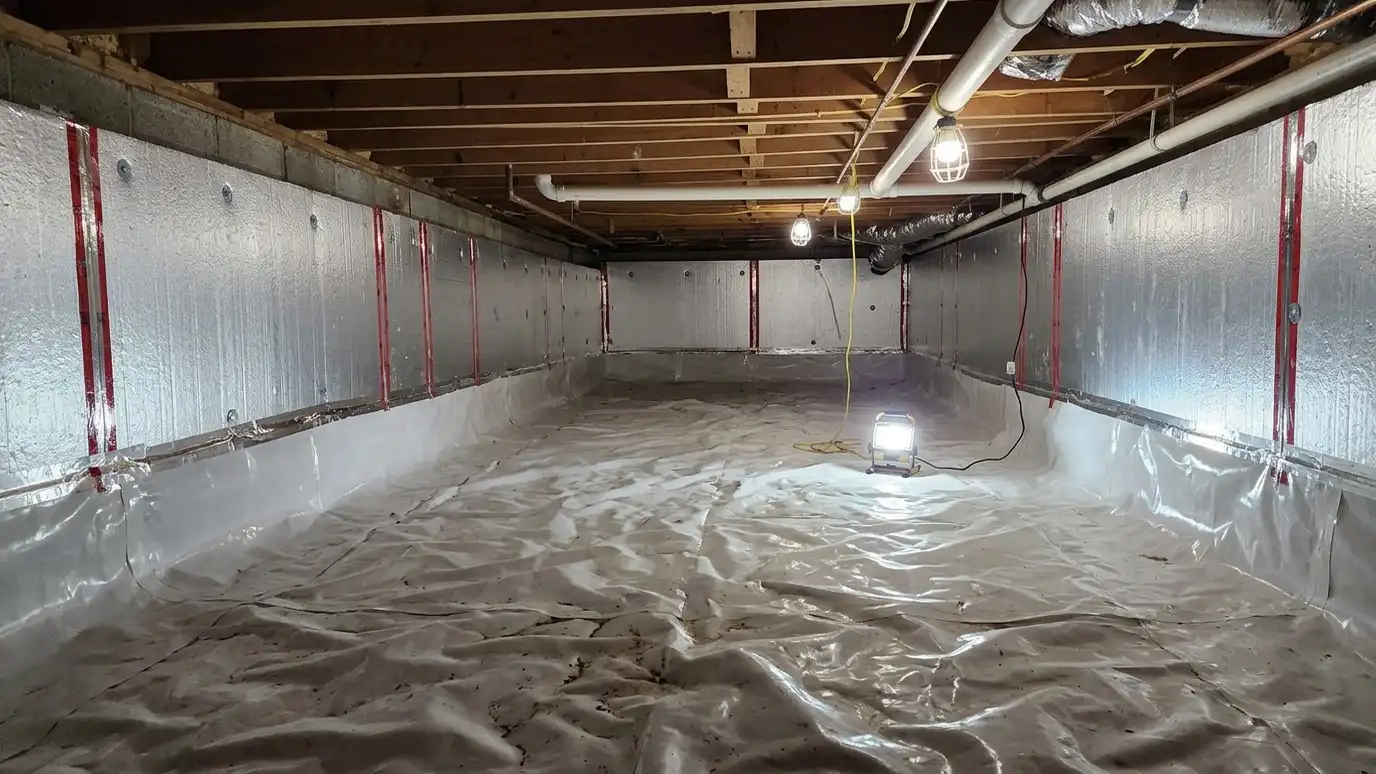
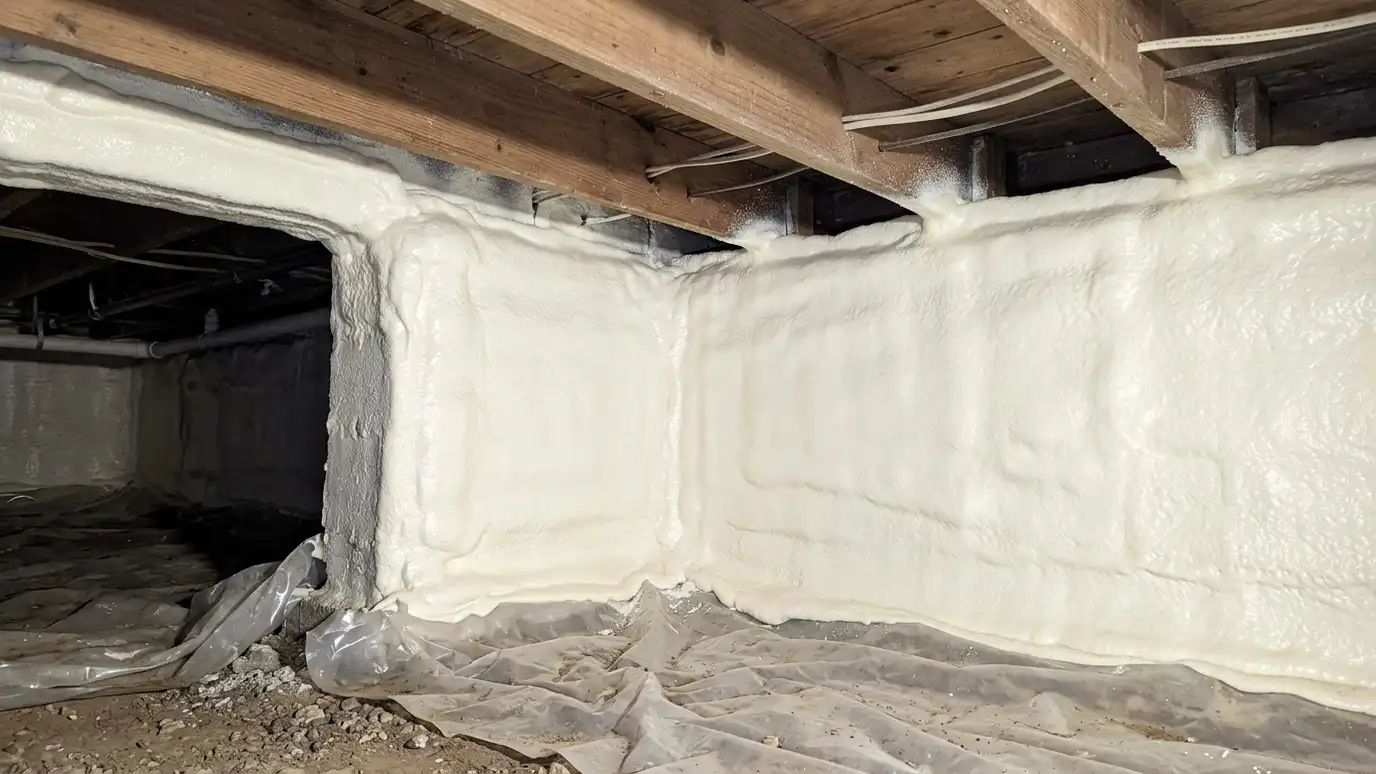
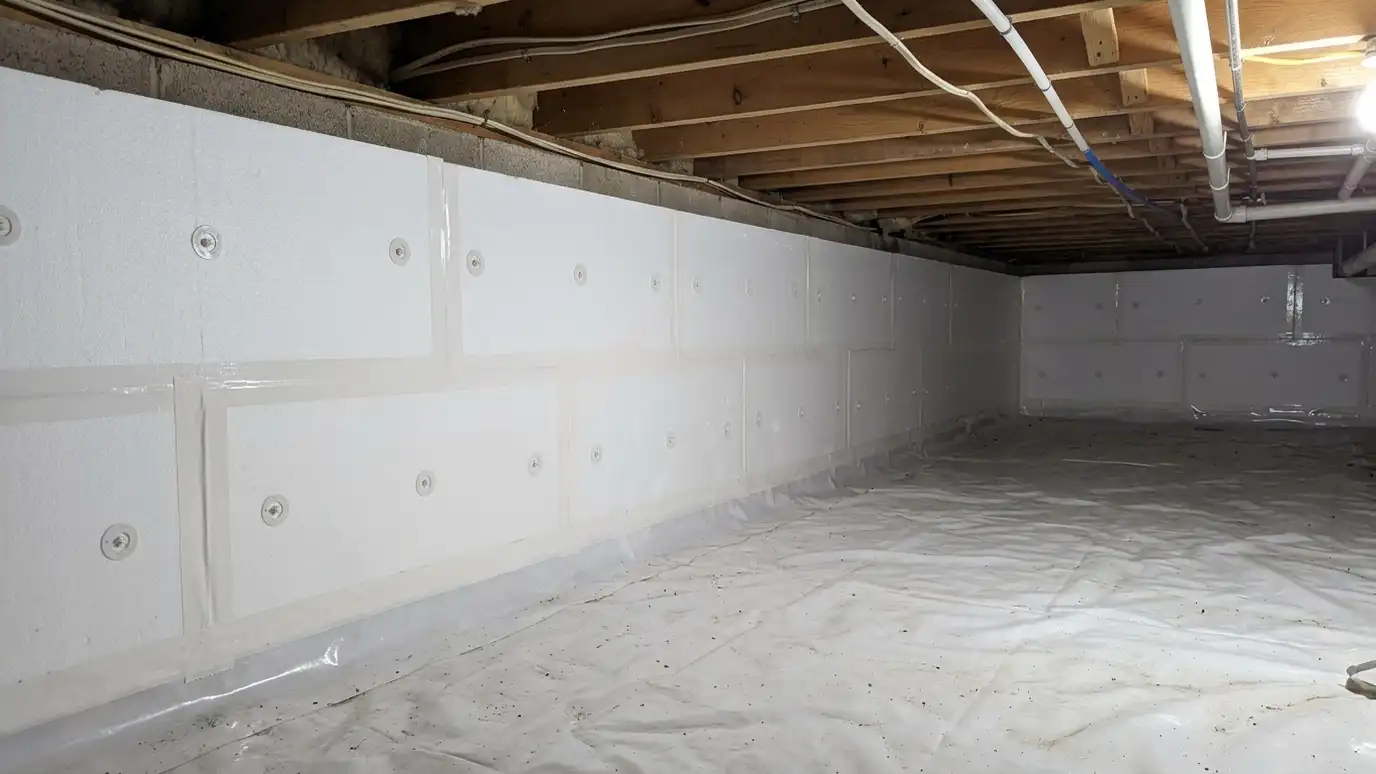
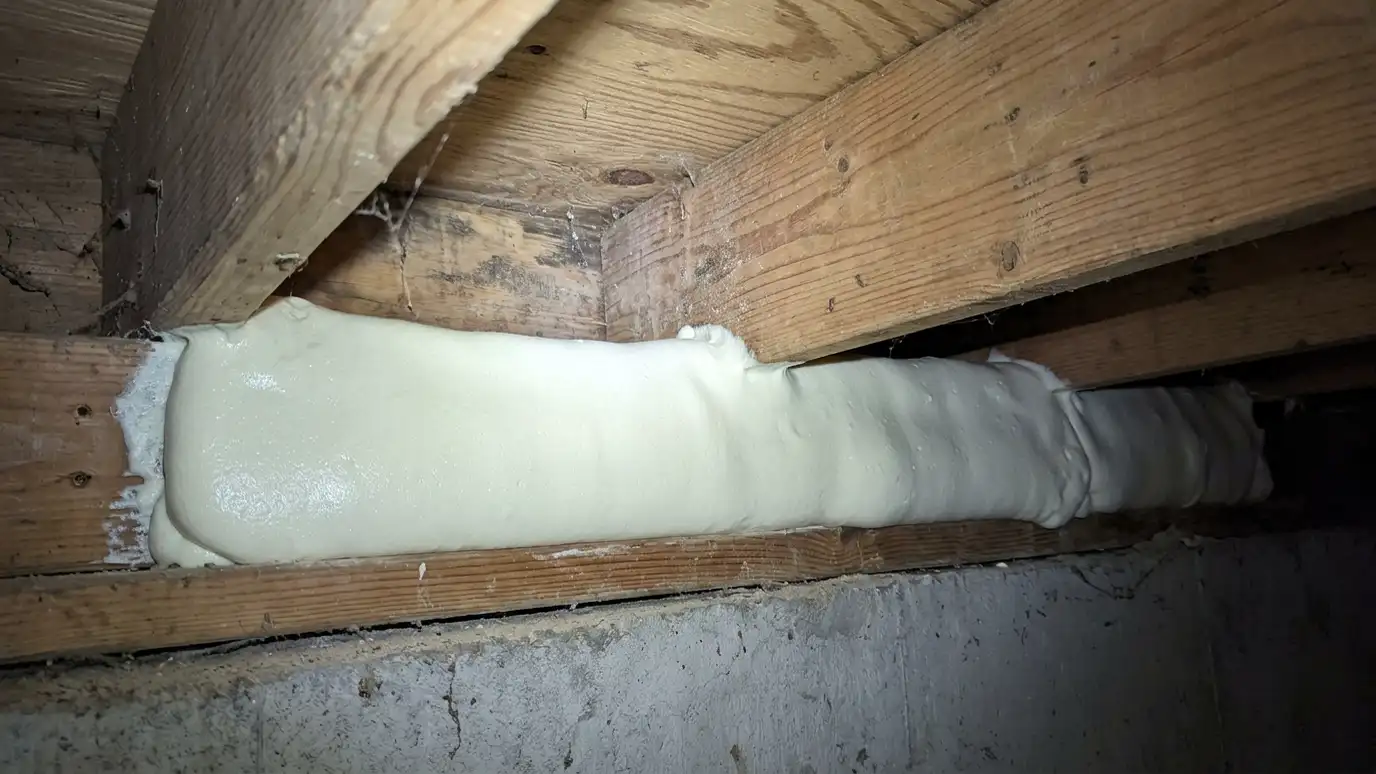
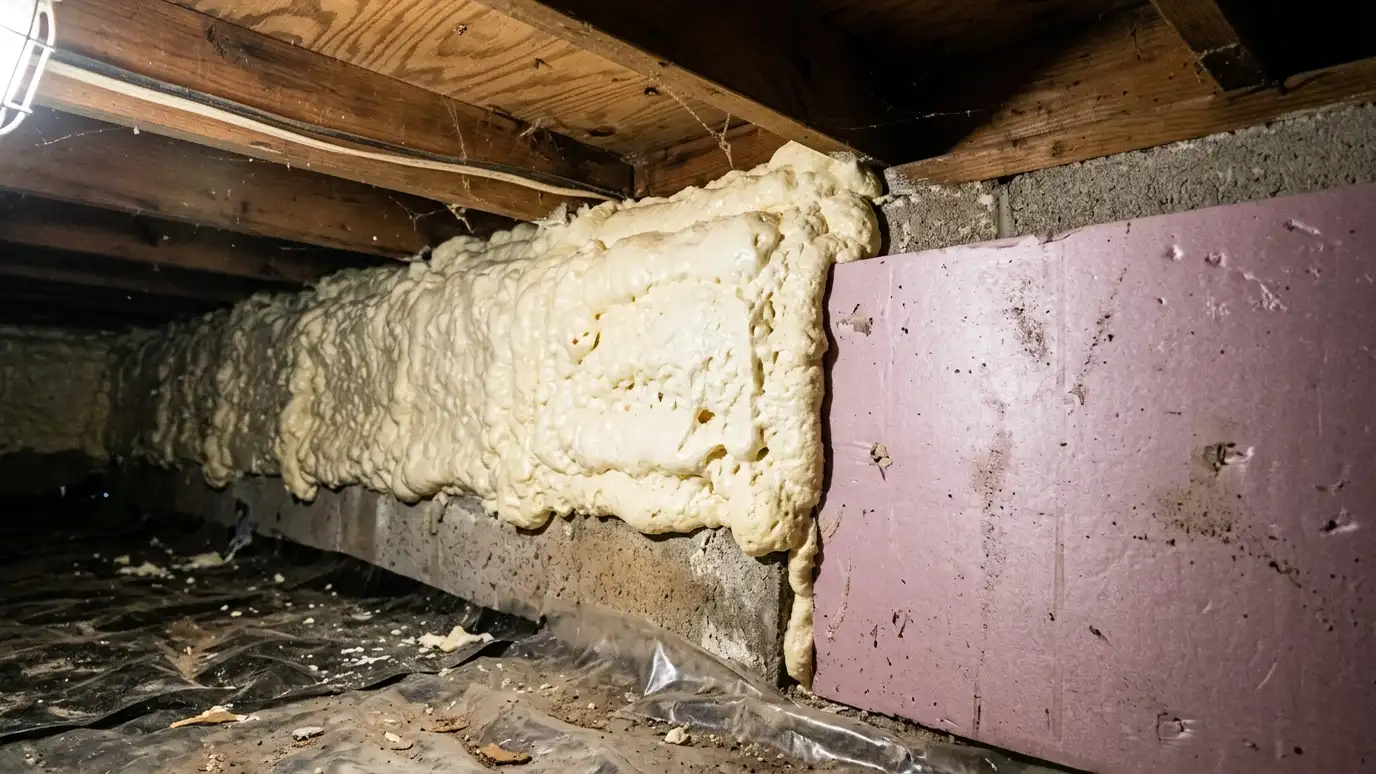
Vented spaces are insulated under the floor, and sealed spaces are insulated on the foundation walls and rim joist.
The choice depends on moisture and equipment.
We explain which suits your house.
Seal before you insulate
The rim joist, floor penetrations, vents and the access door are big air leaks. Sealing them often improves comfort more than insulation alone.
Insulation works best where air does not blow through it.
We seal first.
Materials
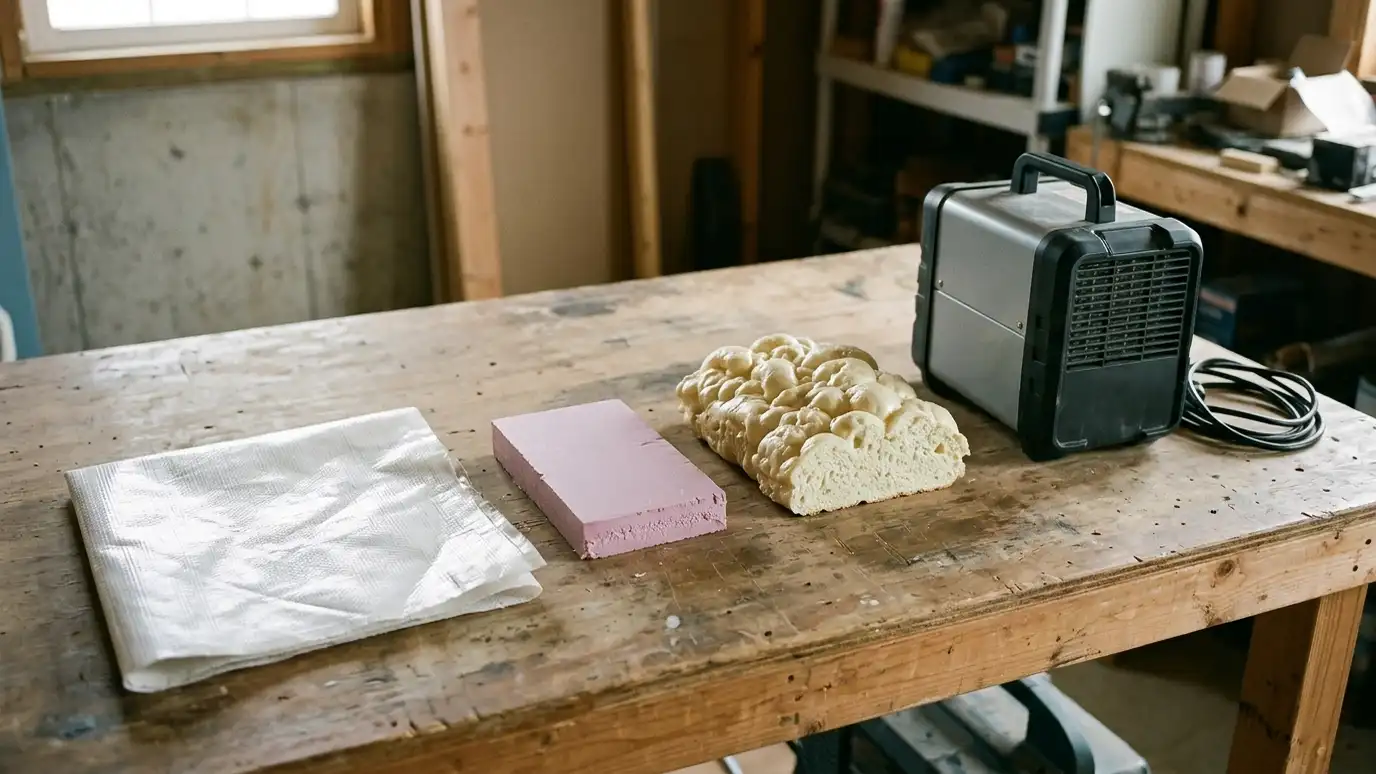
Fiberglass batts are low cost but absorb moisture. Mineral wool holds shape, foam board resists moisture and spray foam seals gaps.
Each has a place.
We match the product to the space.
Keep it dry
Wet insulation stops working and holds moisture against wood. Drainage, a liner and humidity control come first.
Fallen batts are a warning sign.
Supports keep batts in place.
Ducts and pipes
Ducts and pipes lose heat and sweat. Sealing, wrapping and sleeving them improves comfort and reduces moisture.
Water lines near vents need freeze protection.
Support everything off the ground.
Realistic expectations
Comfort can improve, but savings depend on the whole house, so we do not promise numbers.
An energy rater can look at the full picture.
Check utility programs for incentives.
Seal air leaks, keep moisture under control and then insulate with a material that suits your space.