How mold starts
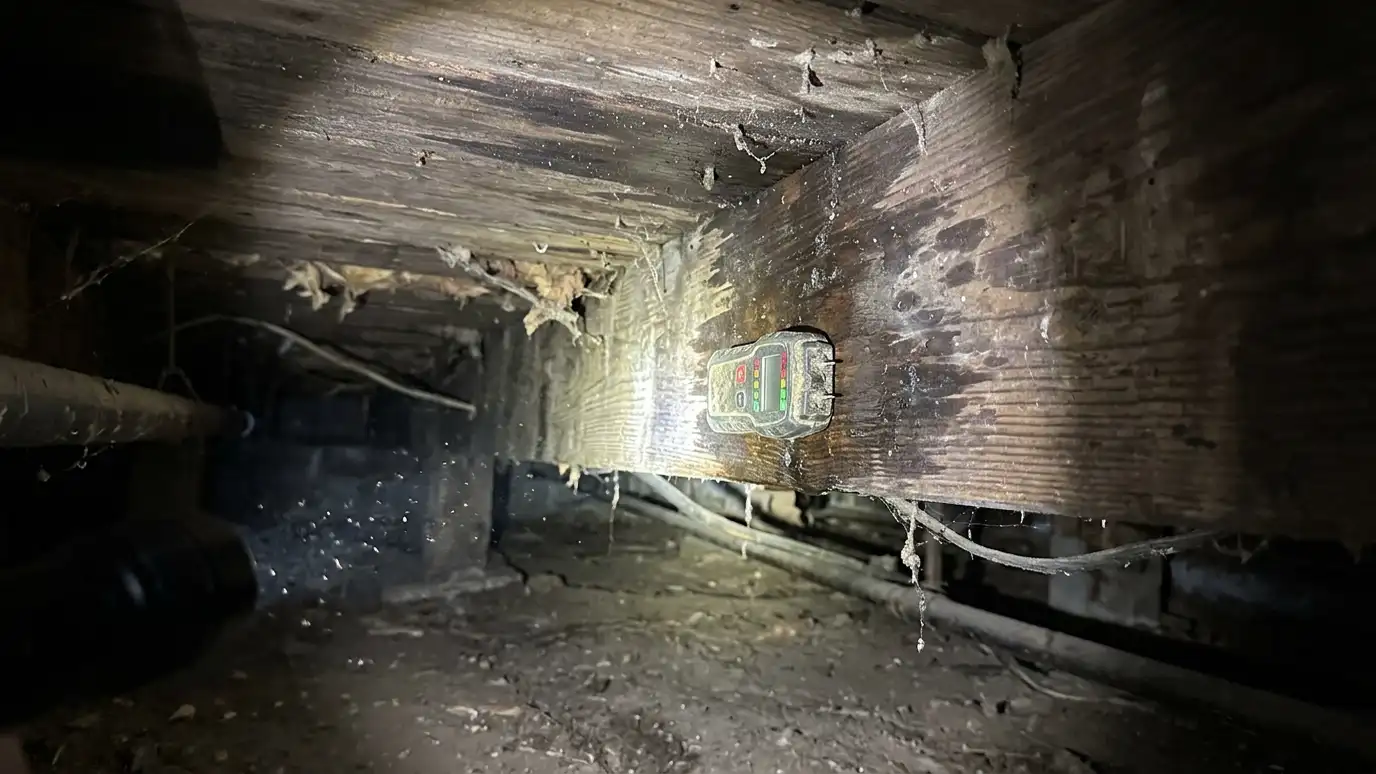
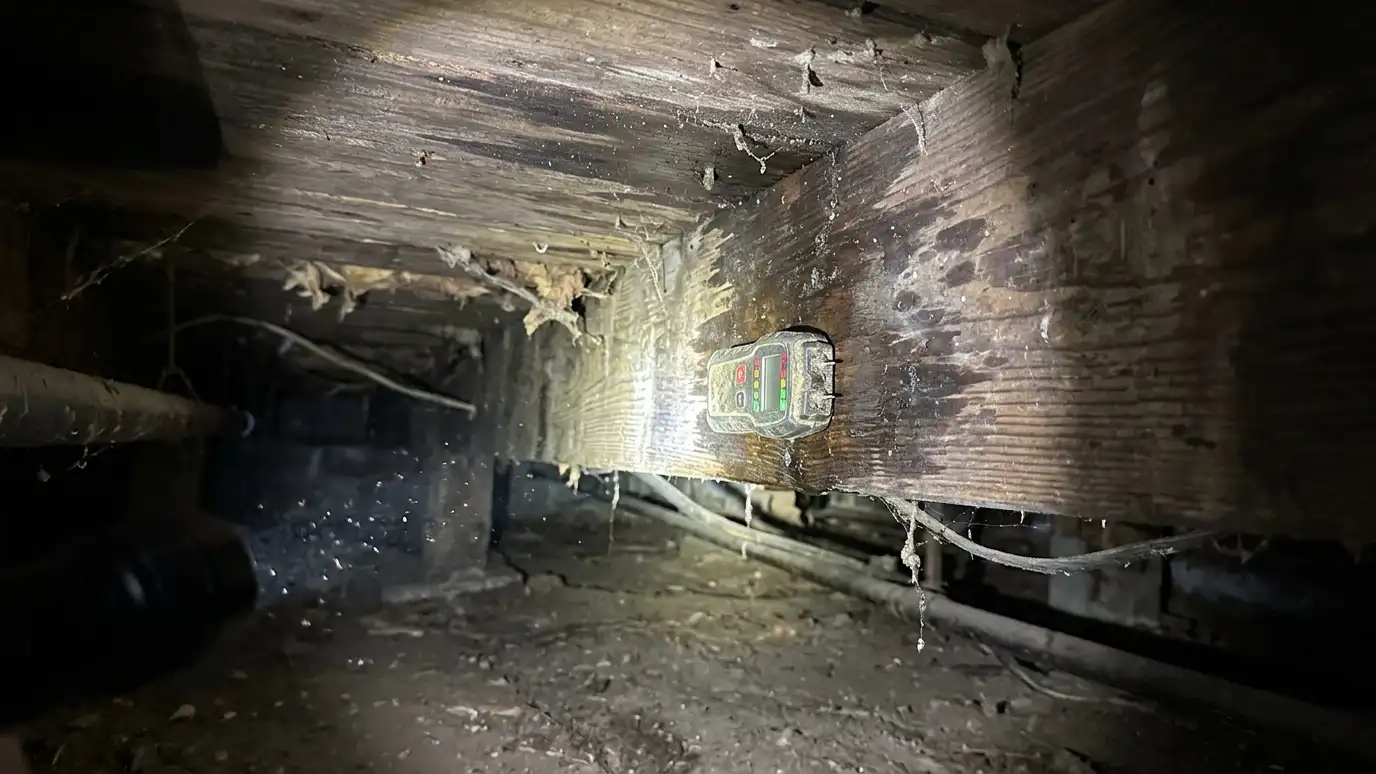
Mold needs moisture, organic material and time. Joists, subfloor and old insulation offer plenty of food, and humidity or leaks supply the water.
Dark spots and a musty smell are common signs.
Not every stain is mold, so we look closely.
Why it matters upstairs
Air moves up from the crawl space into the living area through gaps. A damp, moldy space can affect indoor air and odor.
Sealing and drying cut the flow.
We make no health claims and suggest independent testing when you want it.
Cleanup basics
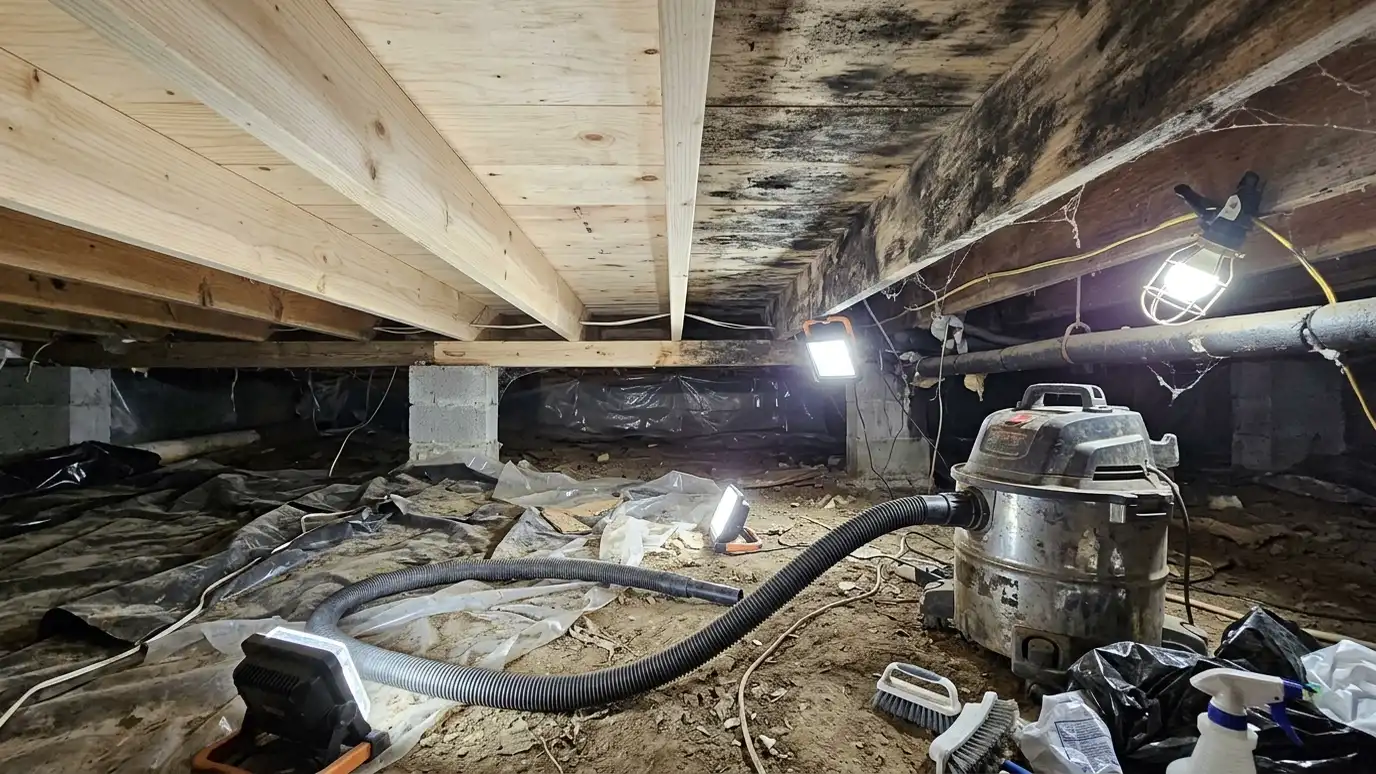
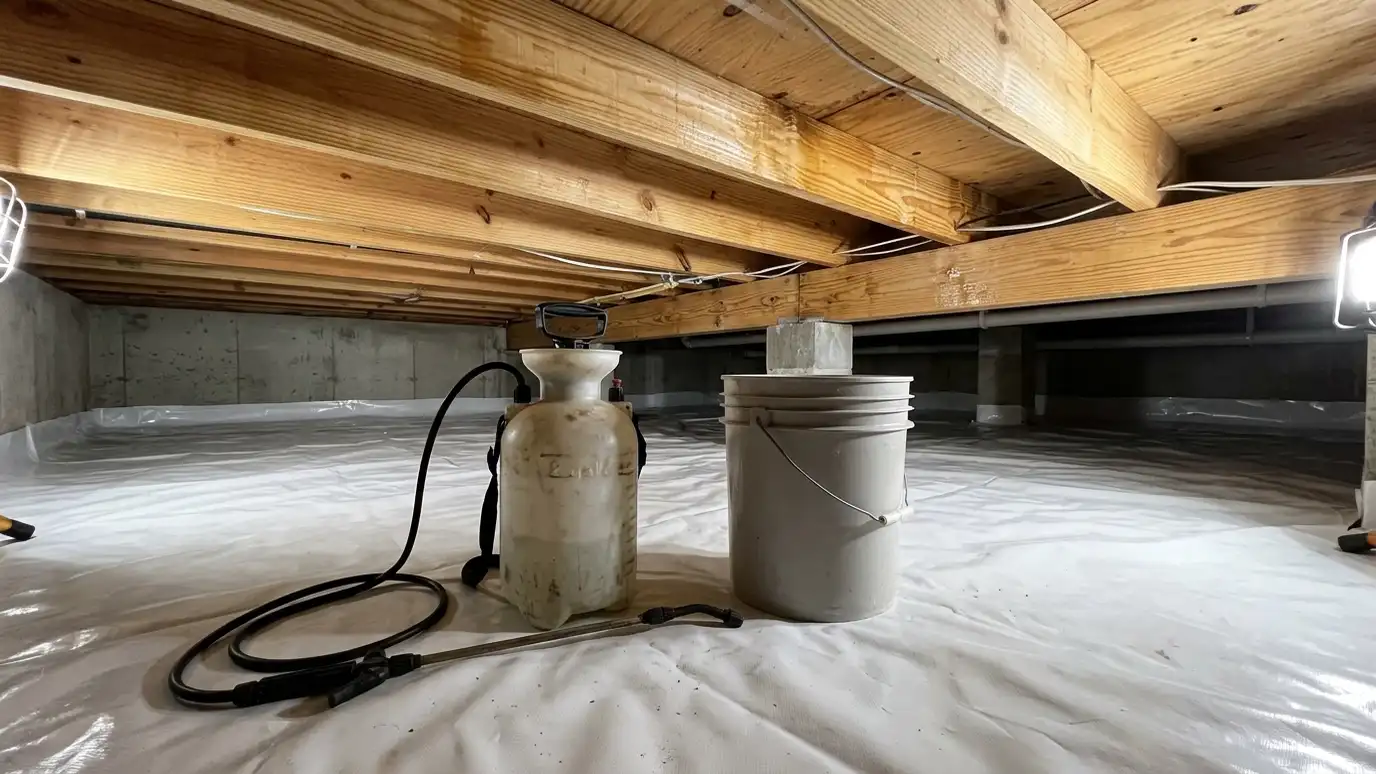
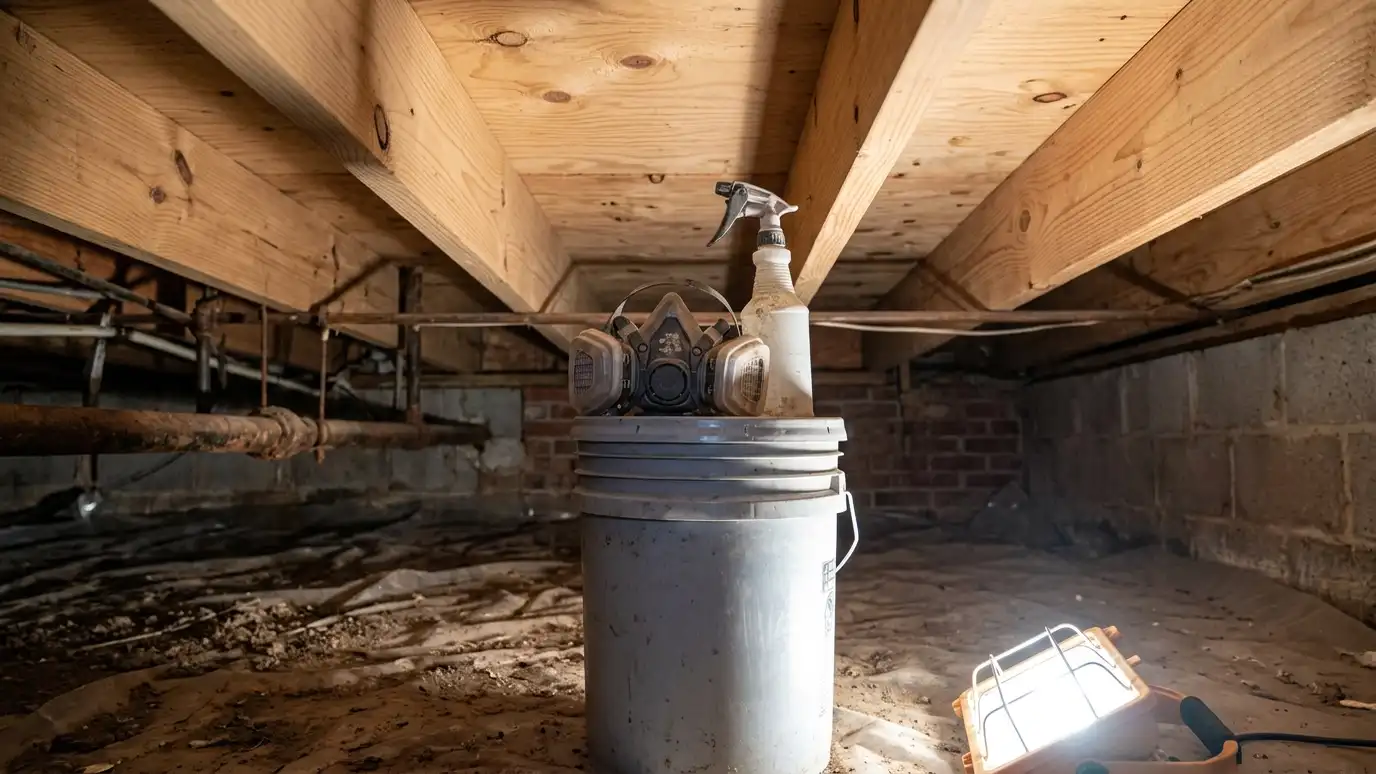
Safe cleanup uses containment, protective gear and HEPA vacuums. Wood is cleaned by brushing, sanding or blasting, and ruined materials are removed.
Wet wood is dried first.
Treatments may follow.
Fix the cause
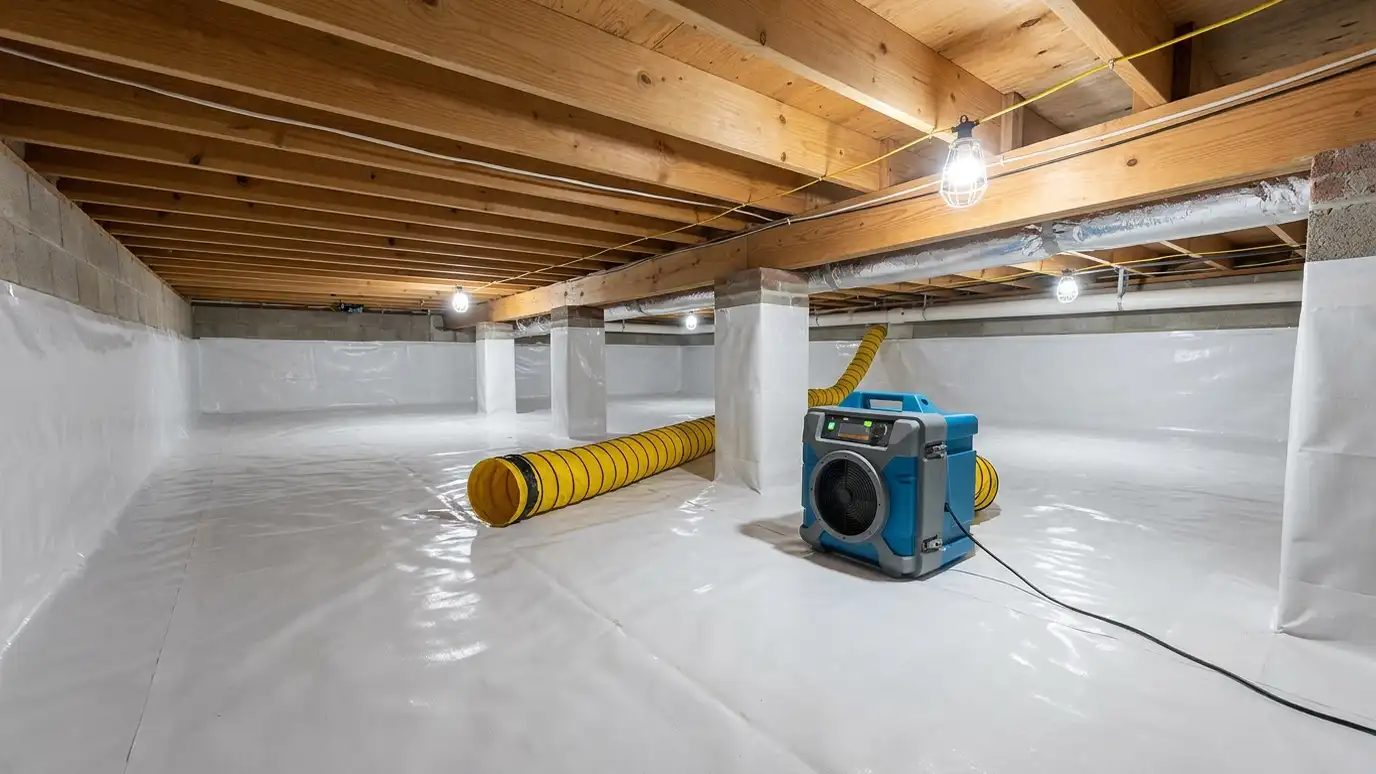
Without moisture control, mold returns. Drainage, a liner, sealed vents and a dehumidifier keep humidity low.
Repair leaks and condensation sources.
Check the space each season.
Testing options
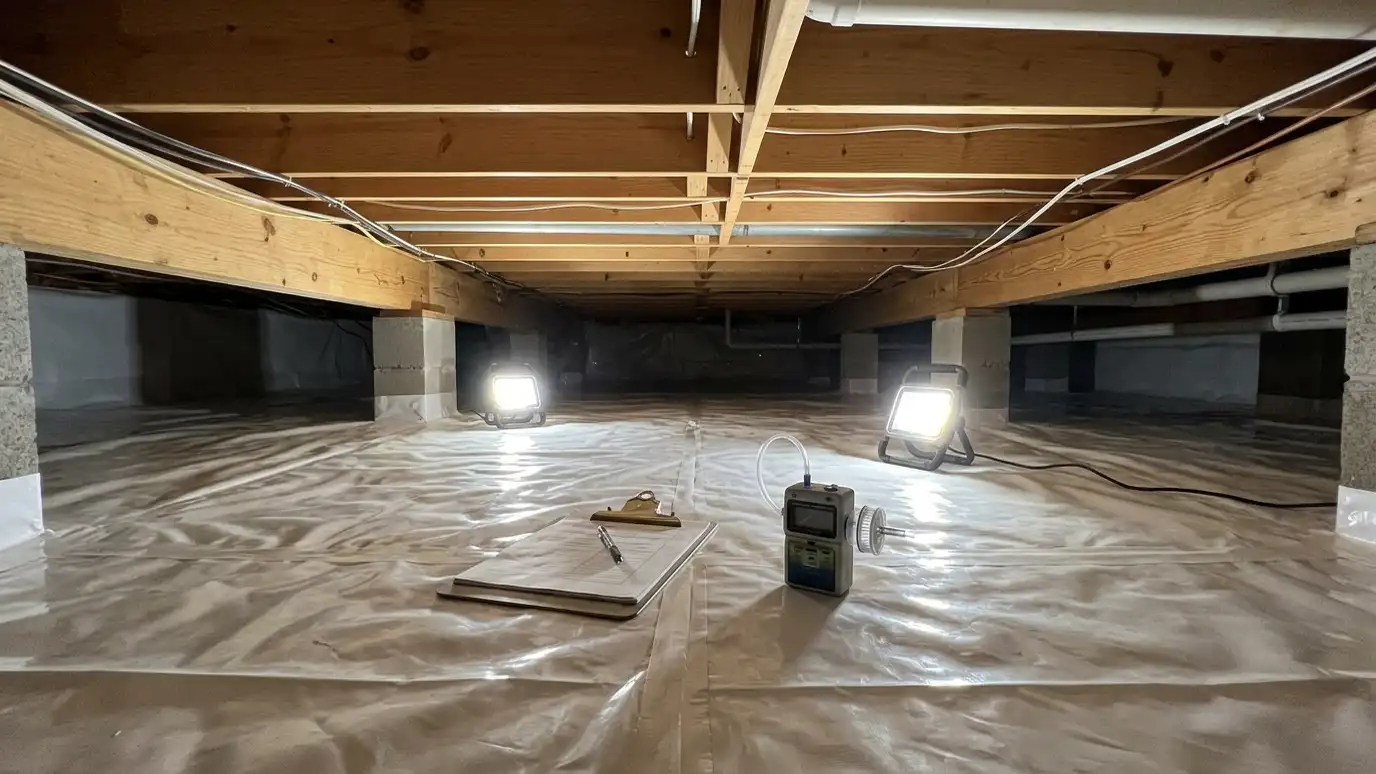
Sampling can document types and amounts at one time. It does not replace fixing moisture.
Independent testers avoid conflicts of interest.
We provide photos and readings for your records.
Keep it away
Seasonal checks, clean gutters, a working pump and a dehumidifier with a clean filter are simple habits that help.
Sensors alert you to rising humidity.
Call us if the smell returns.
Fix the moisture, clean the growth safely and keep humidity under control so the space stays dry.