Sagging floor repair that finds why a floor dips, adds supports, repairs framing and lifts the floor gradually so rooms feel level and solid again.
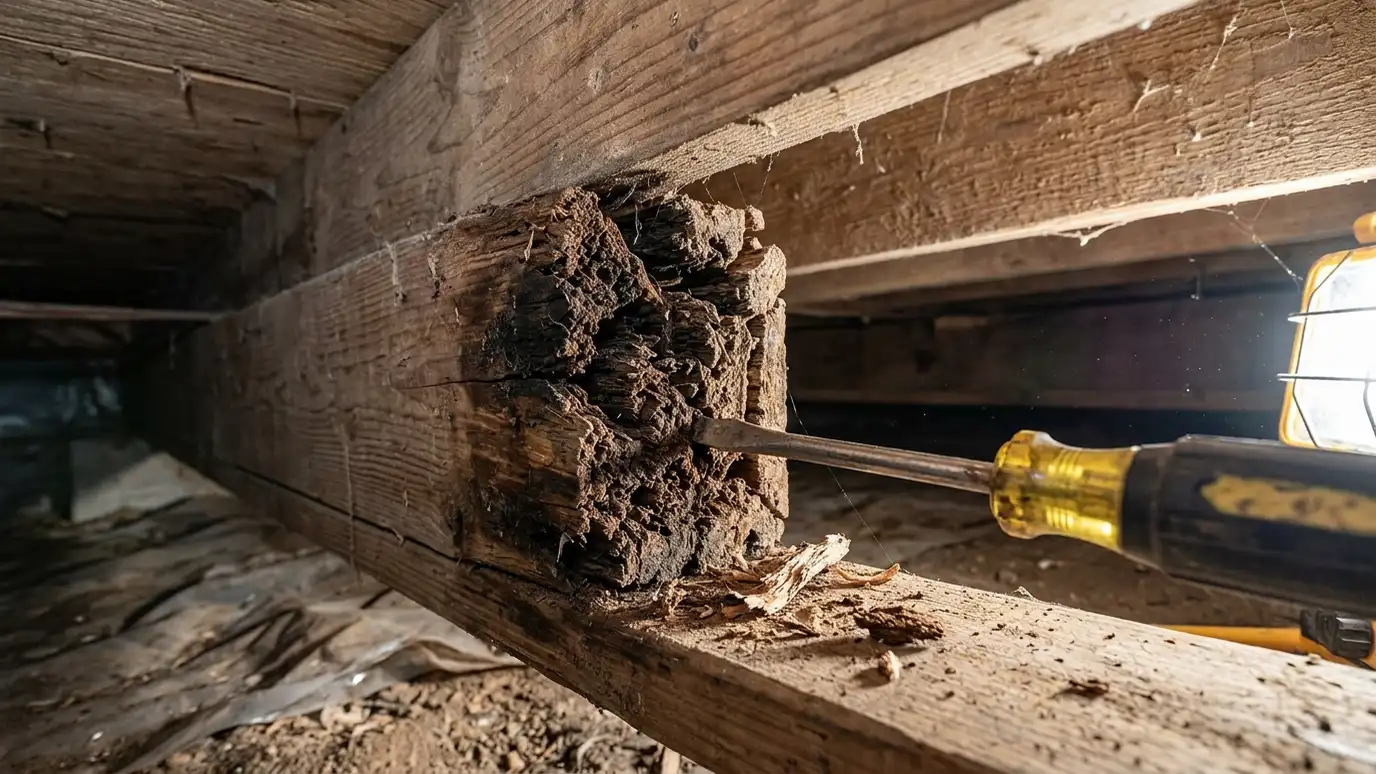
A floor that dips, slopes or bounces is telling you something about the structure under it. Causes include failed or missing supports, rotted joists, sagging beams or settled piers. Homeowners in Nashville see this in older houses and after long wet periods, often noticing a marble roll or a gap at a baseboard.
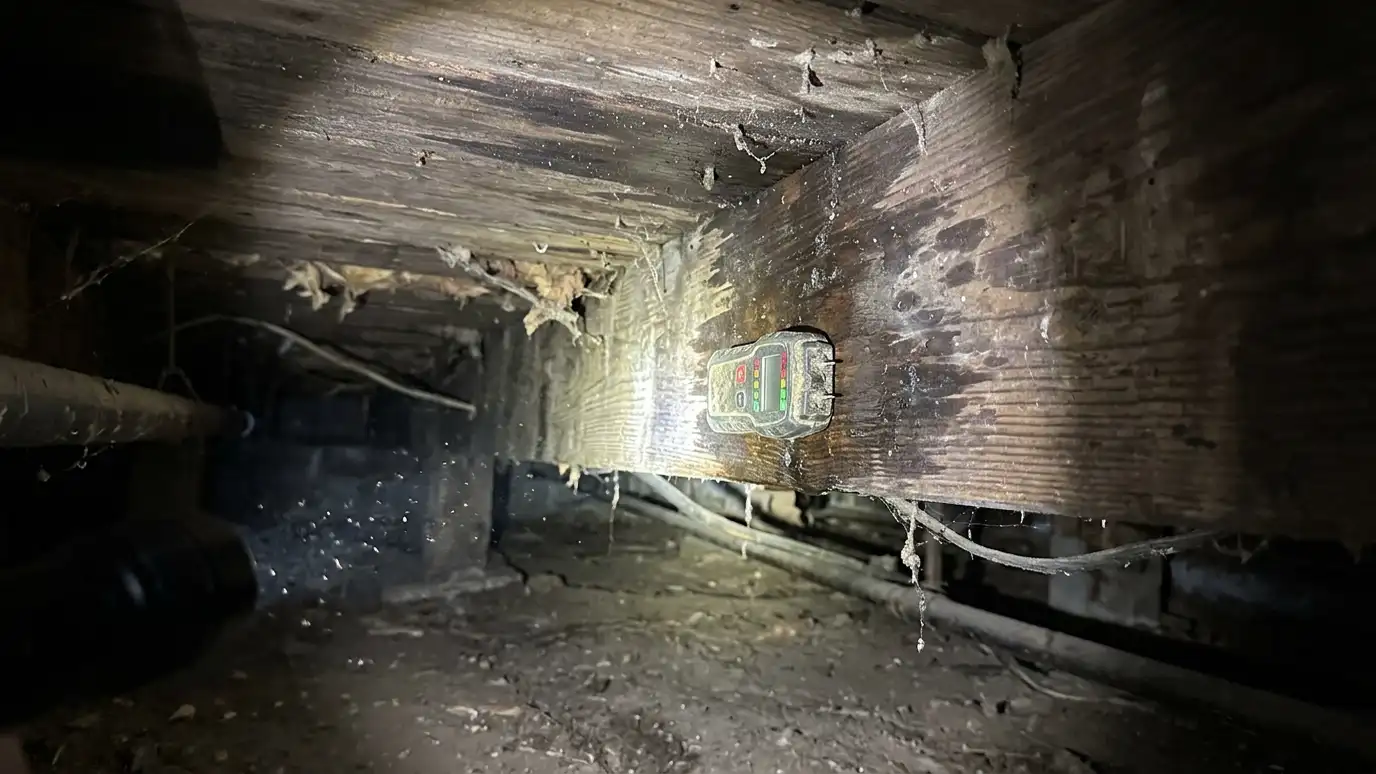
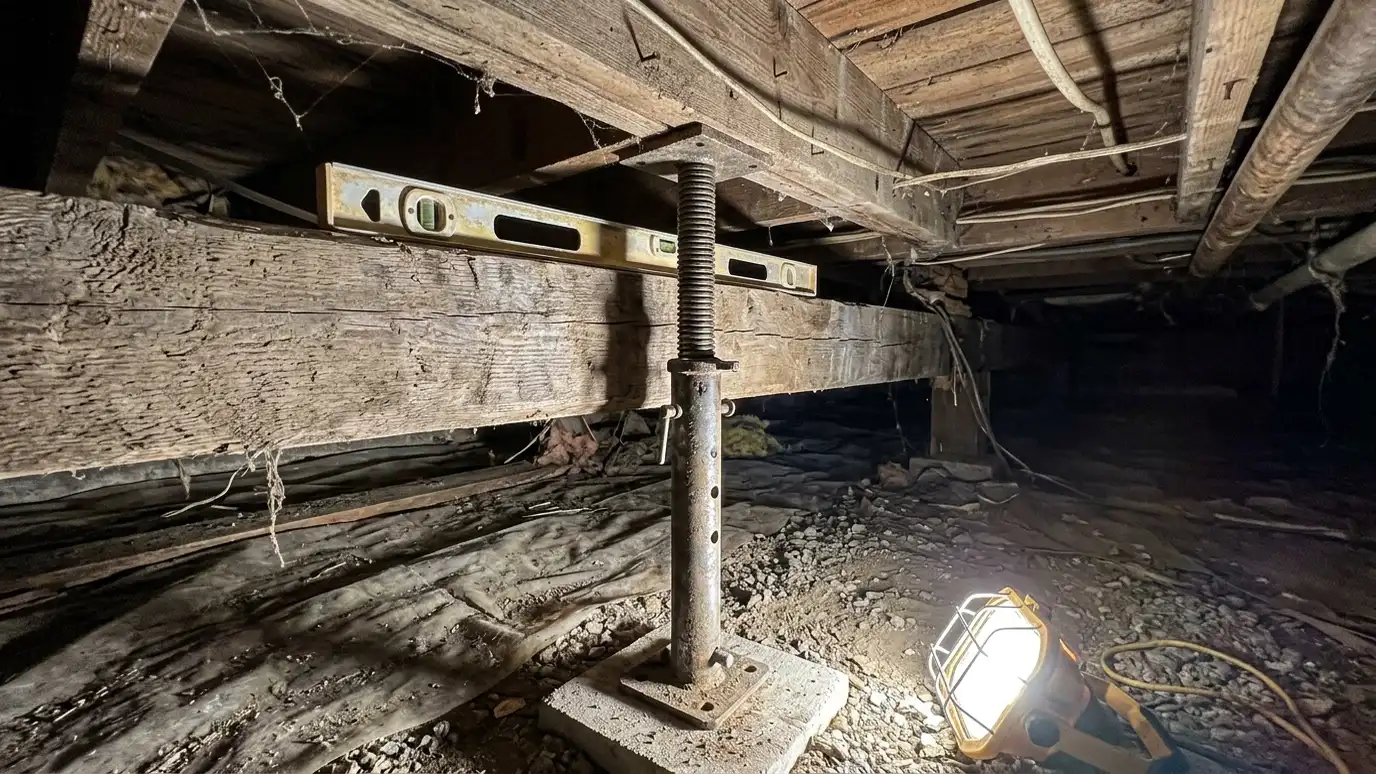
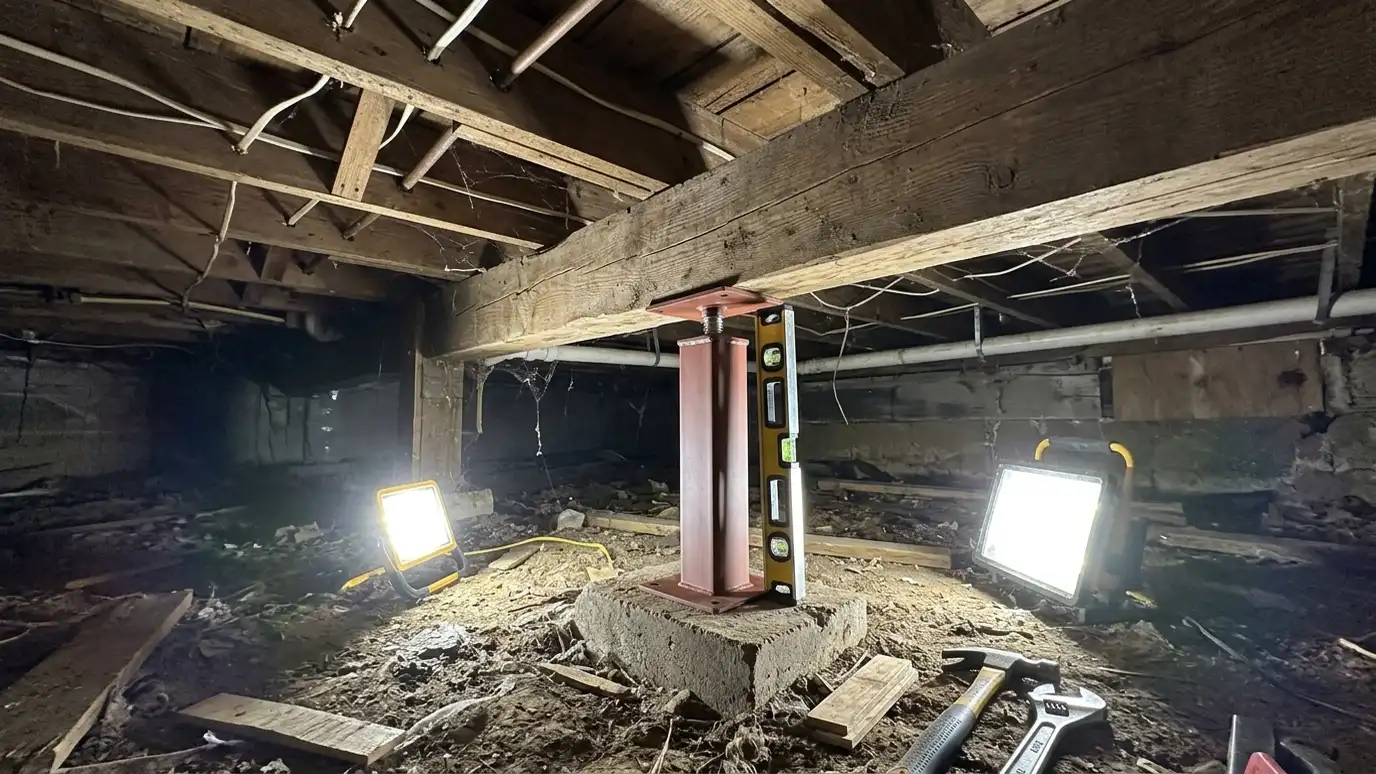
We measure the sag with a level or laser and look underneath for the cause. Then we add or replace support posts on proper pads, sister damaged joists, repair or replace beams and rebuild failing piers. When lifting is needed, we jack in small increments over days, never forcing it, to protect drywall, plaster and finishes. We stop if something resists and explain why. The goal is a floor that feels solid and improves in level, though old settlement and finishes may mean some slope remains, and we tell you what is realistic.
We map low spots with a level or laser to see how large the dip is and where the support has failed.
New posts and pads, sistered joists, repaired beams and rebuilt piers restore support.
Small steps over several days protect finishes and avoid sudden stress on the structure.
We explain how much level can be gained and what old settlement may leave behind.
Drag the handle to compare.
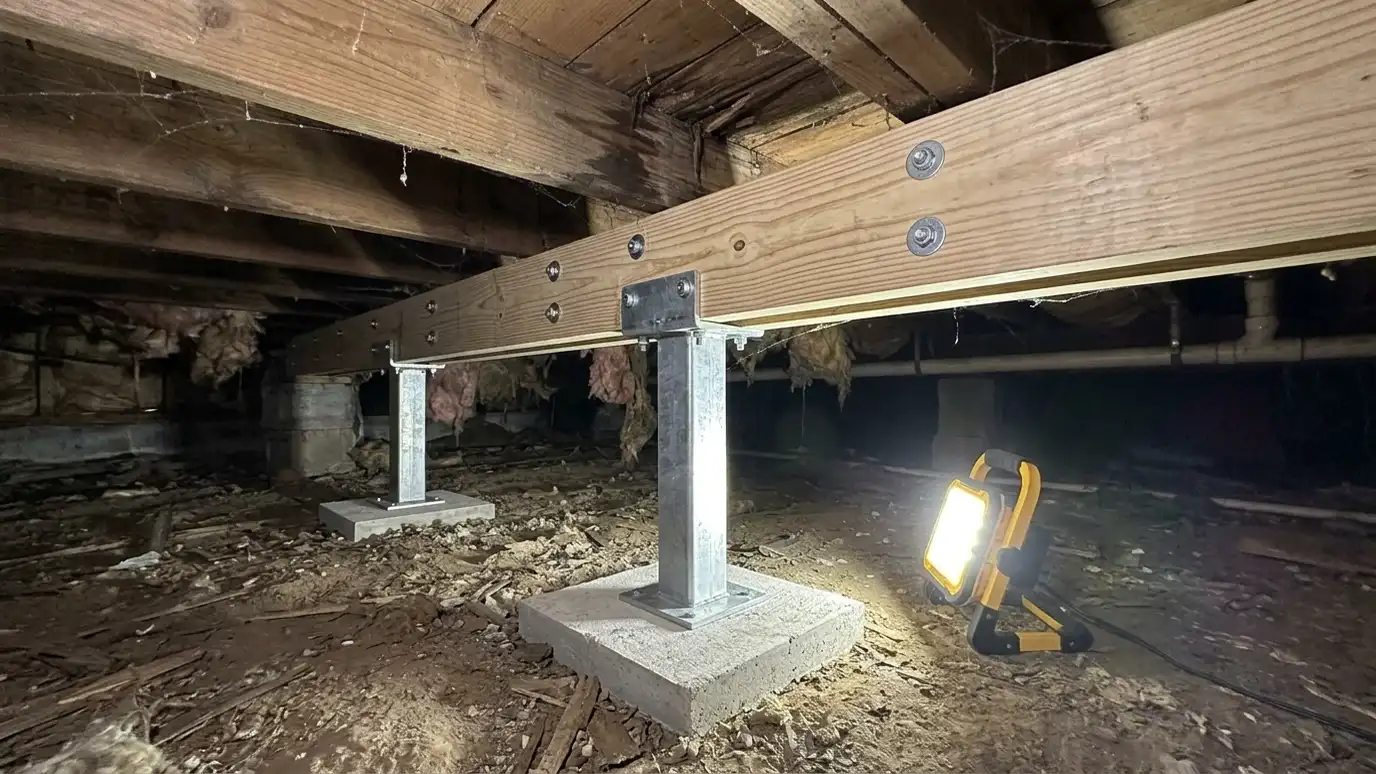
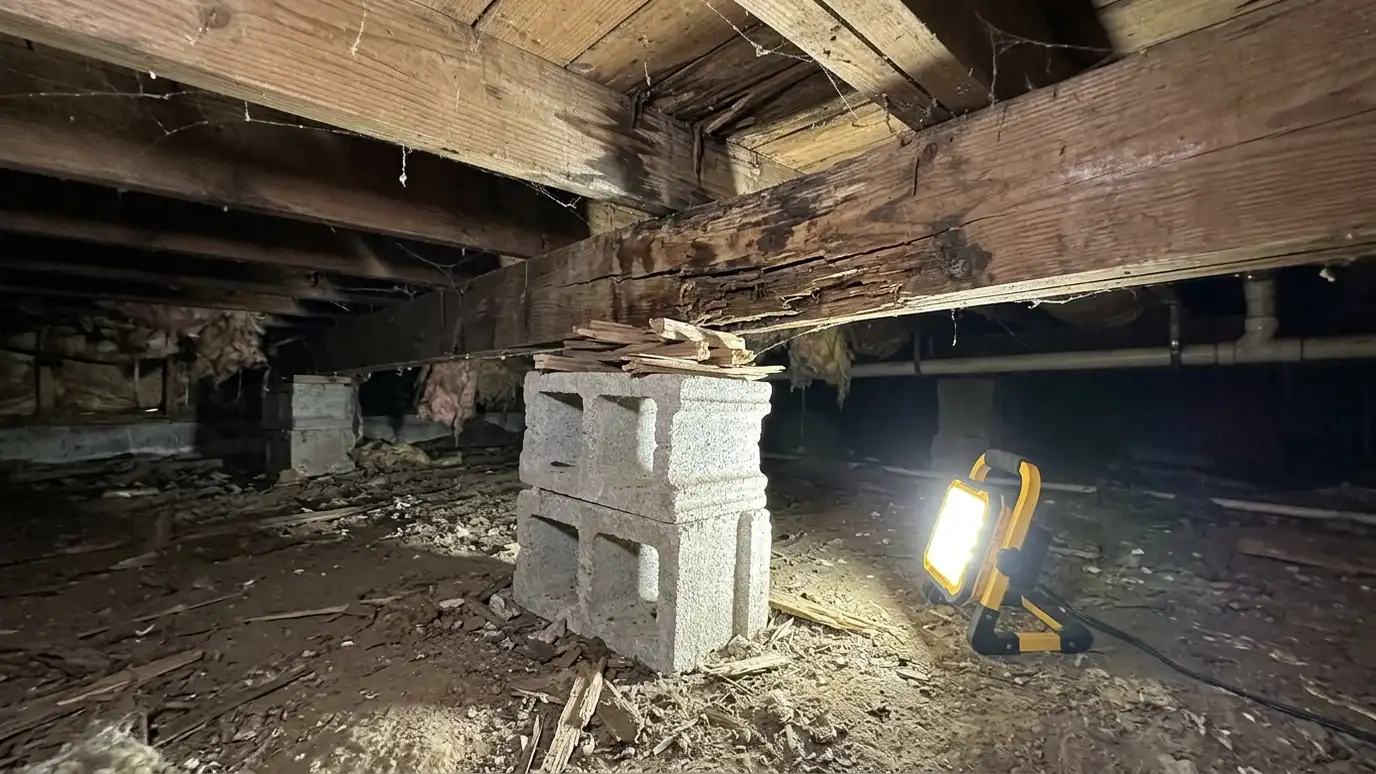 BeforeAfter
Measured, not guessed.
Supports, joists, beams, piers.
Protects walls and finishes.
Posts that stay put.
Realistic about leveling.
Prevents repeat damage.
Every topic has its own page with what to expect and how we approach it.
 Comparison guideSagging Floors and PostsWhy floors sag, how posts, piers and sistered joists restore support and what lifting a floor involves, plus…Learn more
 Comparison guideRot and Damage SignsHow to recognize rotted wood, sagging framing, failing piers and other crawl space structural damage by sight, touch…Learn more
 ResourceNational Association of Home BuildersA trade association for home builders and remodelers that offers education, industry research and consumer information about building…Learn more
Tick what you notice, from musty smells and standing water to sagging floors and pests, to see how urgent your crawl space looks and which pages to read first.
You tell us what you notice, from smells and cold floors to water and sagging, and we ask about the home and past work.
We enter the space, take moisture readings and photos, measure it and look at drainage outside.
You get a plain written scope with priorities, materials, schedule and options before anything is ordered.
We clear debris, repair structure and install drainage, then dry the space to safe moisture levels.
A liner, sealed vents, insulation and a dehumidifier go in, with seams taped and checked.
We walk the finished space with you, leave a care guide and photos and set a first checkup.
Failed supports, rotted joists, settled piers or beam problems are common causes.
Often yes, gradually. How much depends on the structure and finishes.
It depends on the cause and the size of the area. We give a written scope.
Some may close, but plaster and drywall cracks may need repair afterward.
Sooner is better, because ongoing movement can increase damage.
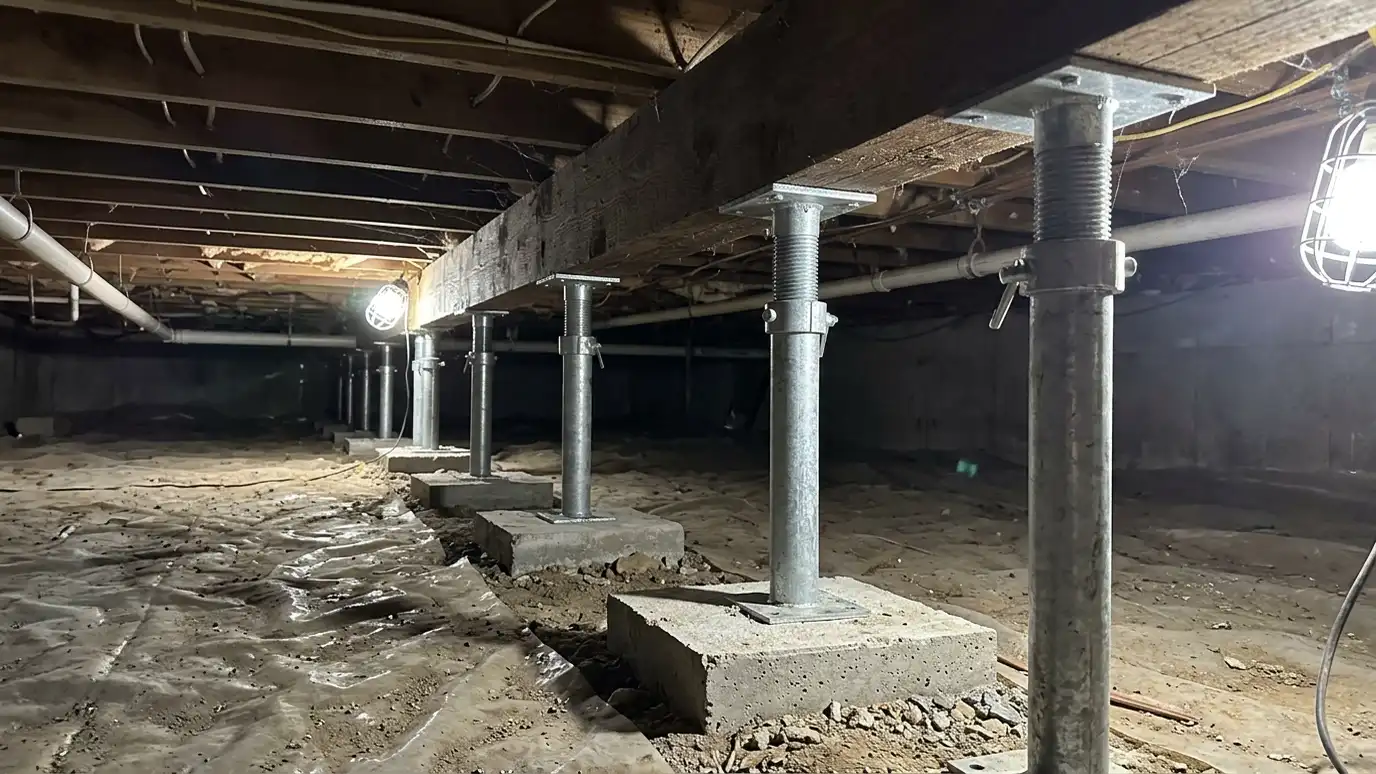 Support PostsSupport posts and adjustable jacks that add steel or concrete support under beams and joists on firm pads…Explore
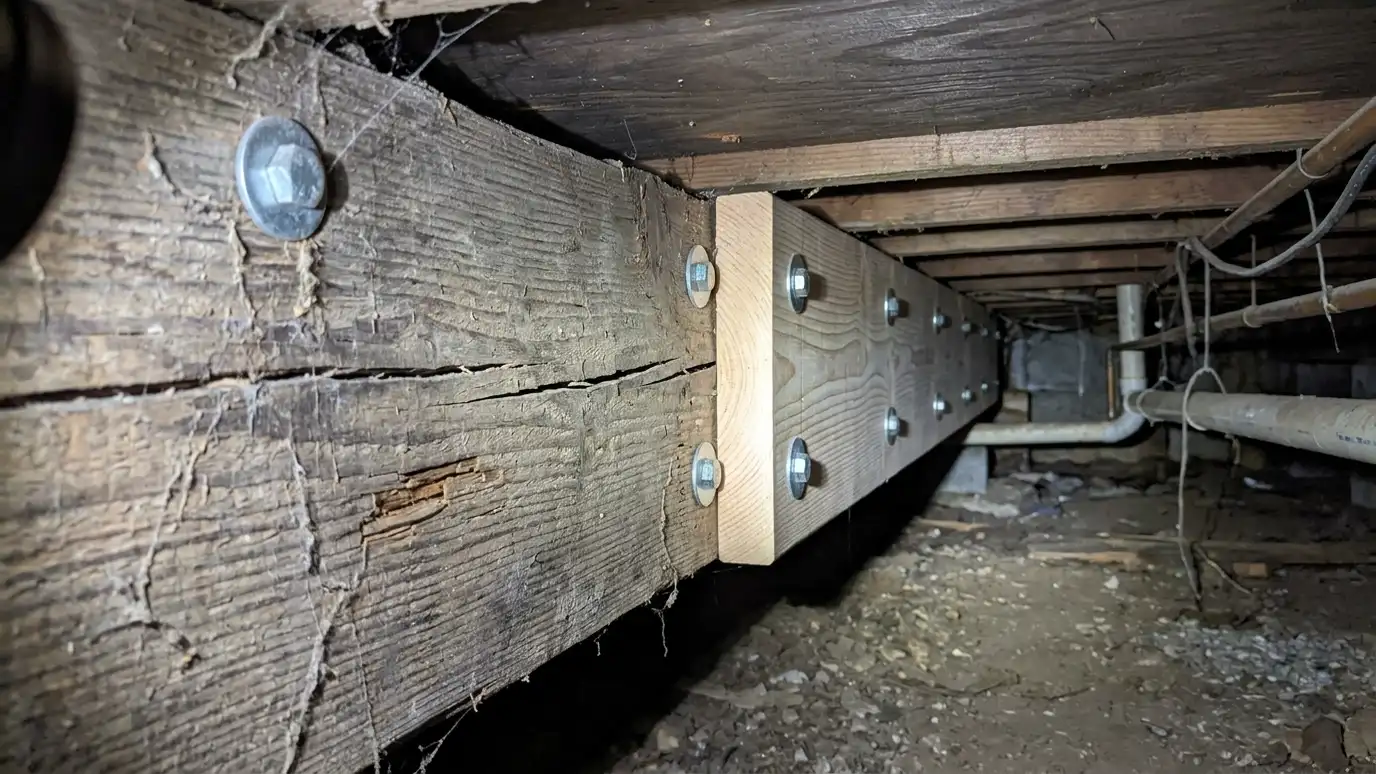 Joist SisteringJoist repair and sistering that reinforces cracked, notched or rotted floor joists with new lumber and hardware so…Explore
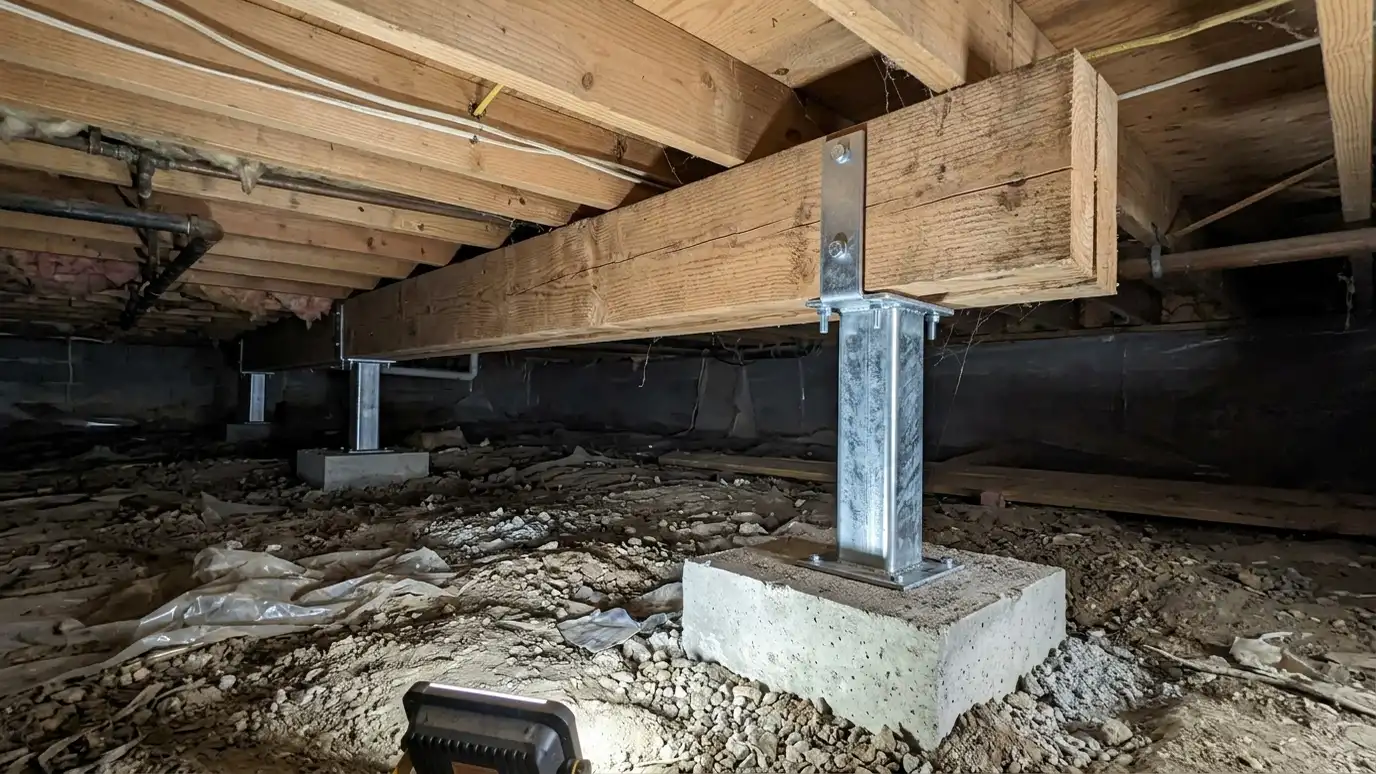 Beam RepairBeam and girder repair that reinforces or replaces the heavy timbers that carry floor joists, with new supports…Explore
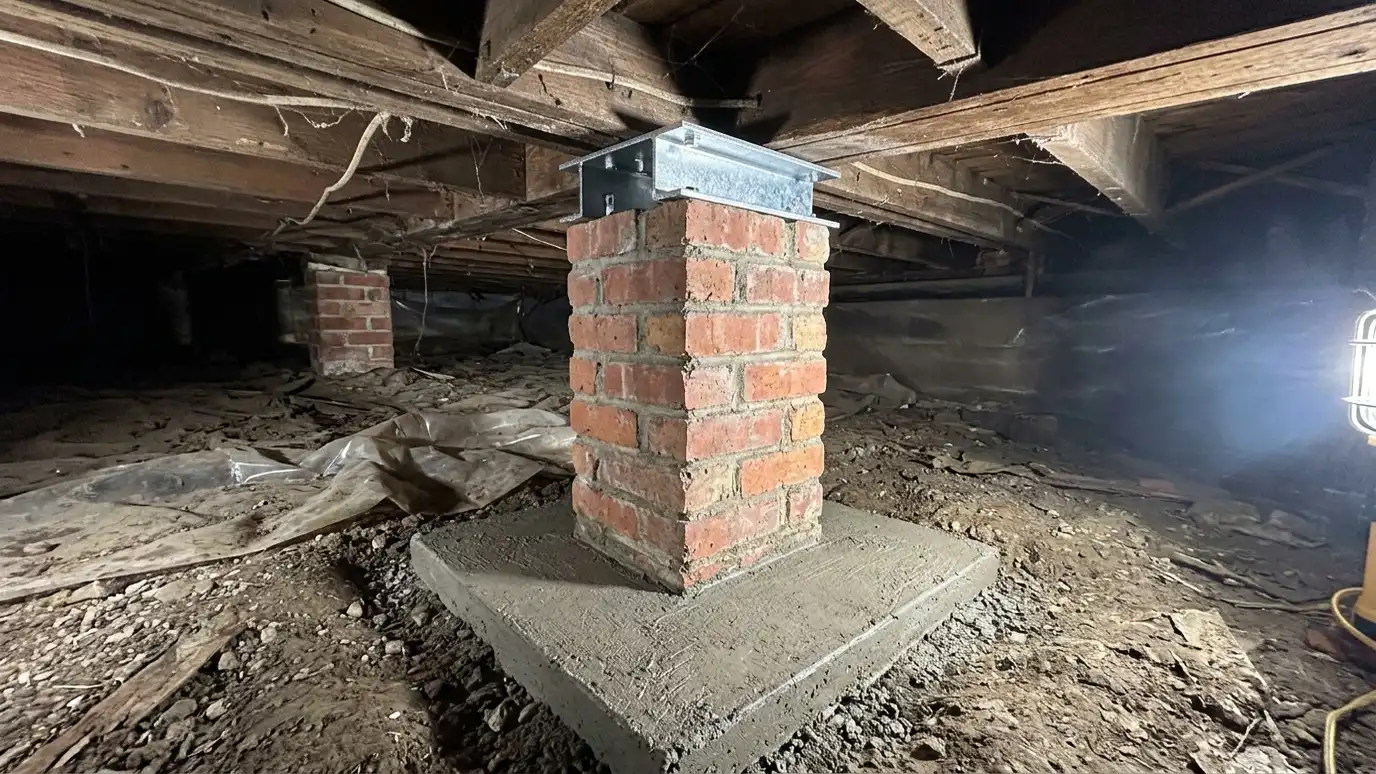 Pier and Footing RepairPier and footing repair that rebuilds leaning, cracked or sunken brick and block piers and adds proper footings…Explore
Tell us about your space and we will call you back to set up a visit.
Or call (615) 357-7797 to talk now.